Prepare a feed the pulper can handle consistently
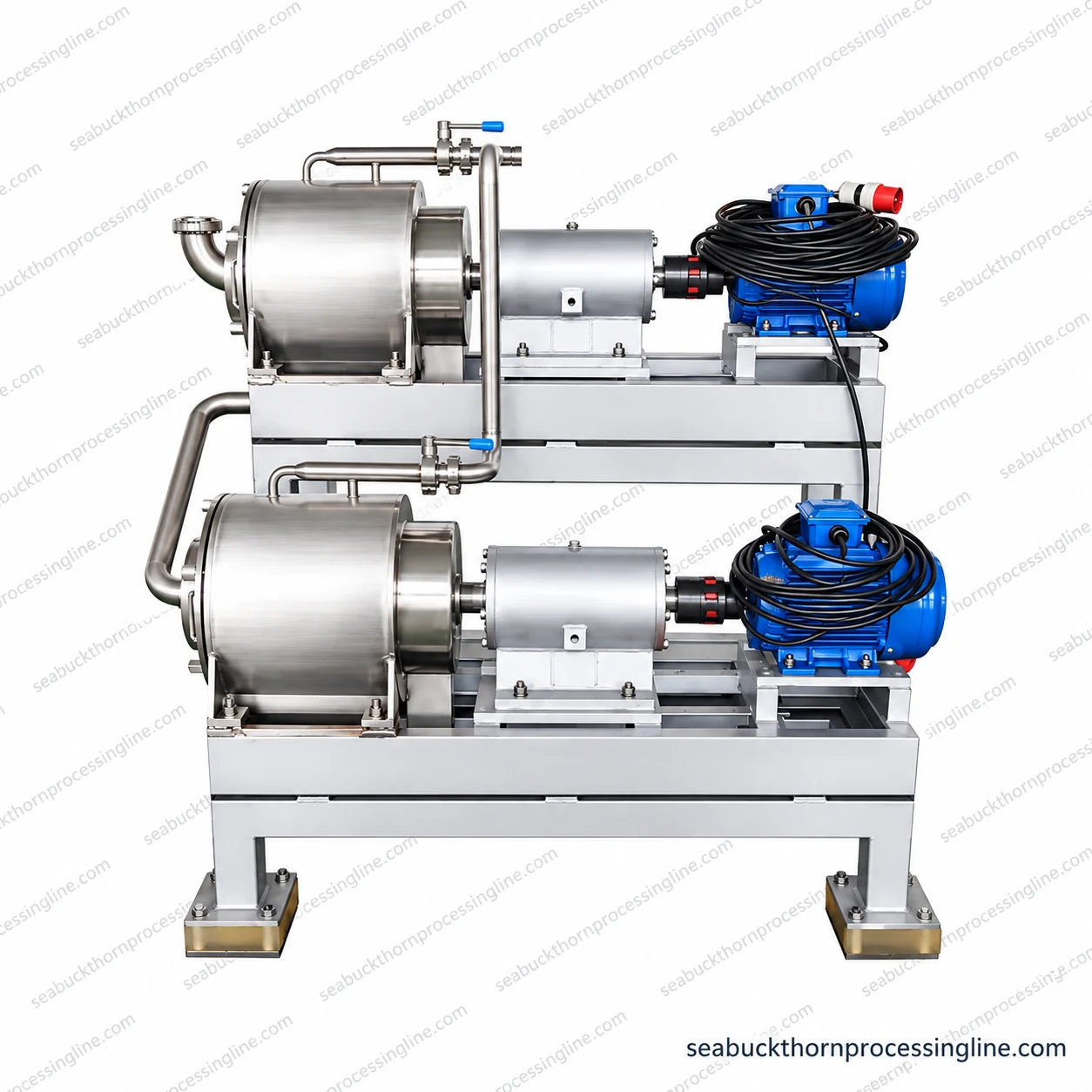
Fresh sea buckthorn arrives with a combination of sound berries, damaged fruit and harvesting debris. Inspection removes unsuitable fruit and accessible foreign material before gentle washing and controlled elevation. Water contact, drainage and conveyor openings matter: small fruit must reach the next operation without excessive crushing, escape or unnecessary dilution.
Frozen berries need a different receiving sequence. Their temperature, clump size and preparation method determine whether they can be metered into the extraction stage. Thaw liquid is a material stream to collect and manage, not an invisible loss. A block of frozen fruit should not be fed to a pulper simply because individual fresh berries are suitable.
Coarse pulping and finishing work as one system
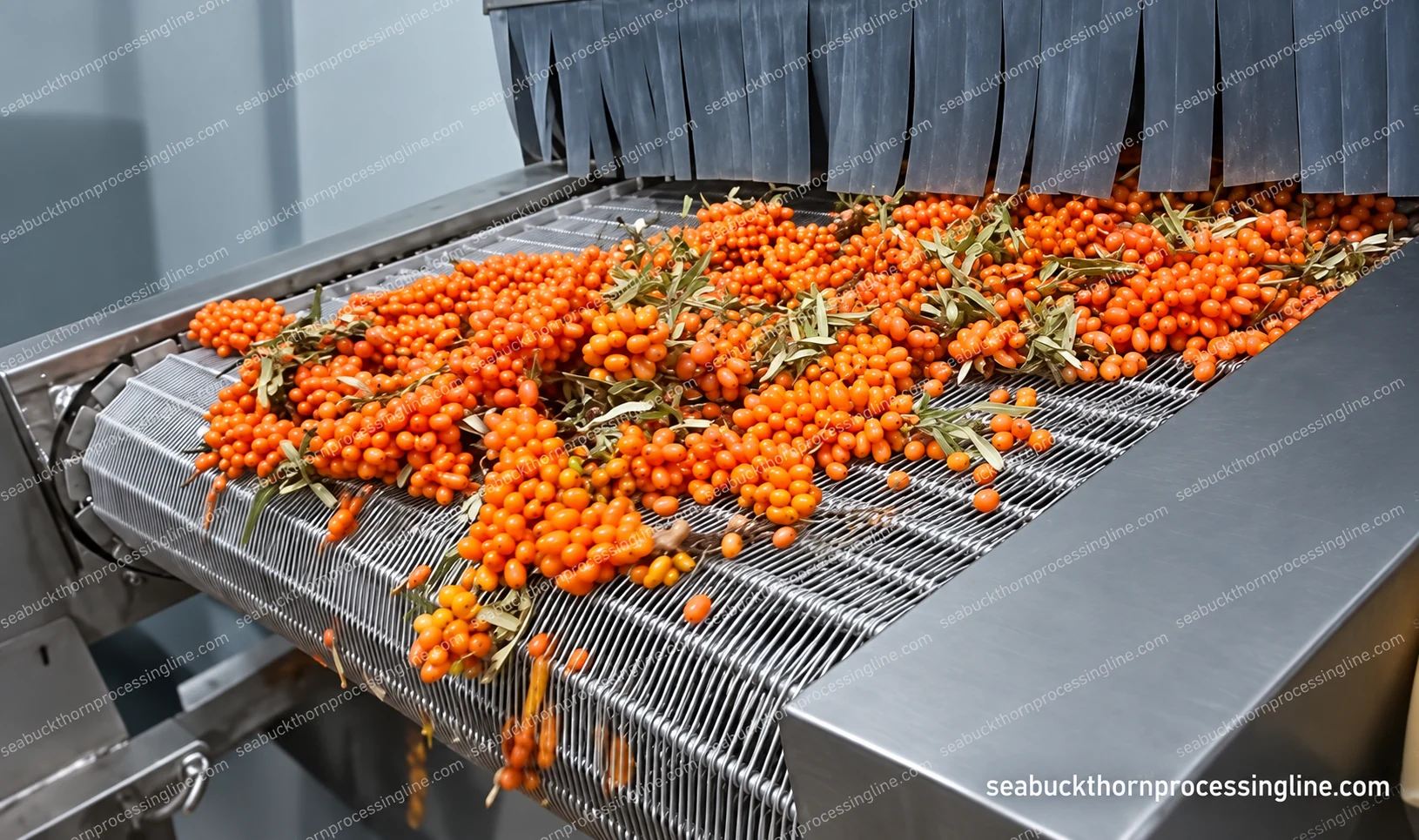
The combined pulper and finisher moves the prepared fruit through two screened stages. Recoverable pulp passes through the selected perforations; retained skin, seeds and coarse material leave through the reject outlets. The second stage refines the first-stage product instead of repeating the whole fruit preparation process.
Screen aperture alone does not define finished texture. Rotor action, feed condition, temperature and loading affect how much material passes the screen and how much remains with the reject. Selection therefore uses both the accepted puree and the separated material: inspect seed fragments, coarse particles, consistency and residual recoverable pulp together. An aggressive setting that increases collected mass can also change the ingredient.
Move puree without turning buffers into long holding steps
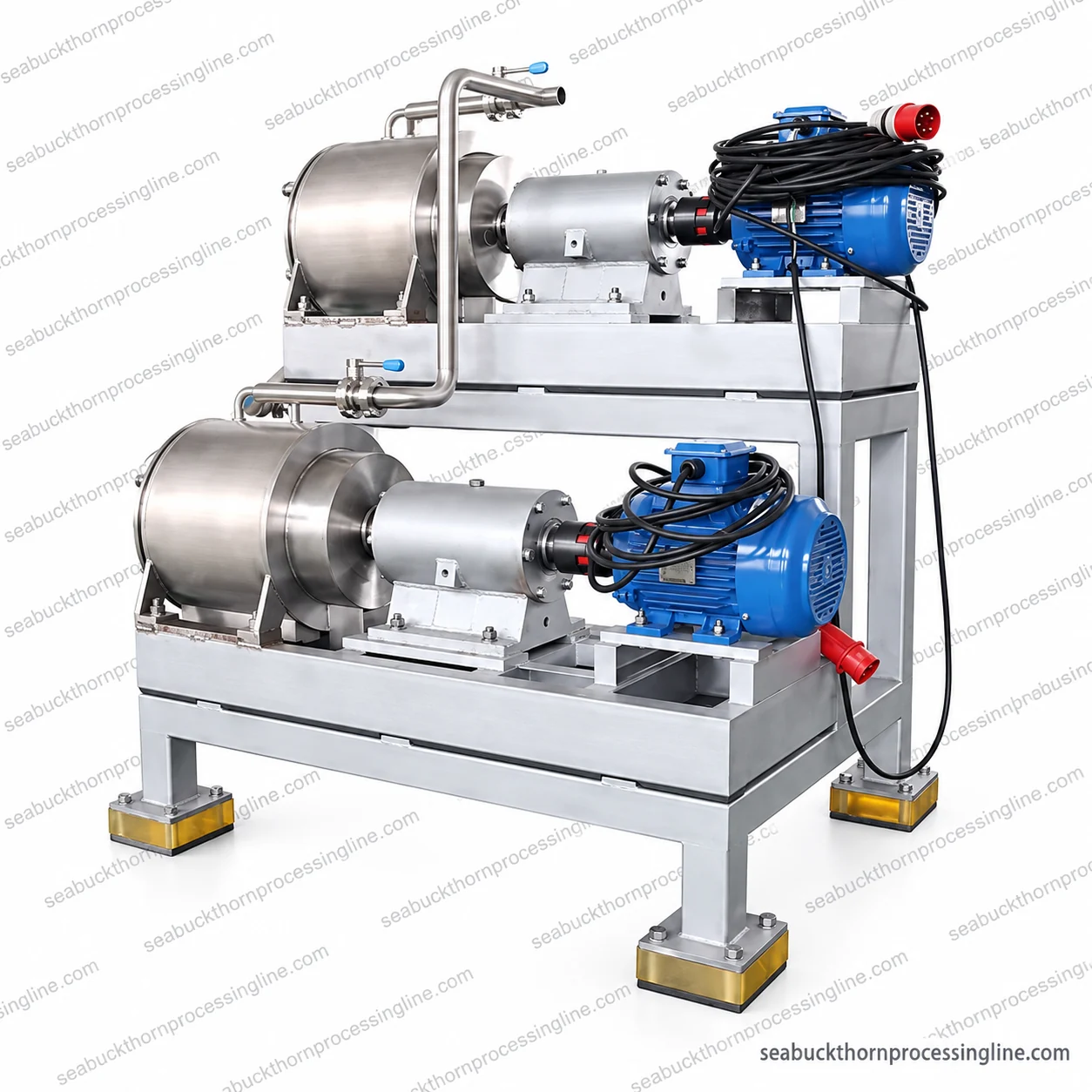
A process tank decouples small extraction fluctuations from the downstream heat-treatment flow. Its useful volume is related to the amount of interruption it must absorb, while the pump is selected for the puree at its actual temperature and viscosity. Pipe size, suction conditions and level control must work together; a larger tank alone cannot correct an undersized transfer path.
Agitation should maintain the intended feed consistency without unnecessarily drawing air into the product. If vacuum deaeration is included, its location, feed temperature, vacuum control and discharge arrangement must suit the puree. Foam and entrained air are evaluated alongside aroma and product carryover; deaeration is not a substitute for hygienic handling.
Connect heat treatment to the selected package
Tubular heat treatment provides controlled heating, holding and cooling for a defined product flow. The selected passage geometry must accommodate the particle distribution and rheology after finishing. The operating schedule belongs to the product and packaging process, with its own validation; a machine family temperature range is not a ready-made sea buckthorn recipe.
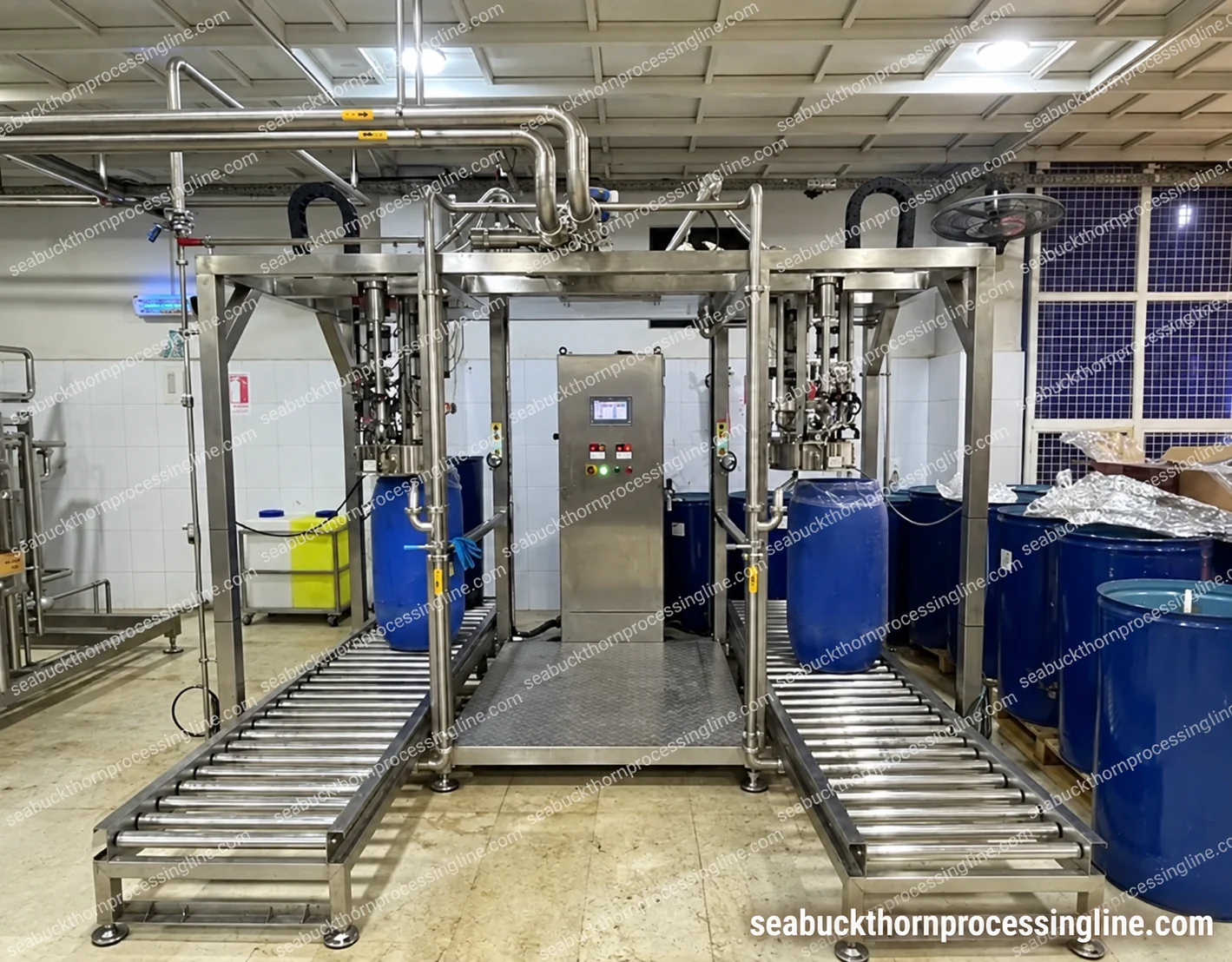
For aseptic bulk supply, the thermal outlet, sterile transfer path and bag filler form a connected boundary. Bag fitment, filling head, dose measurement, changeover and downstream drum movement must match. The filling machine fills prepared product into a compatible sterile package; it does not compensate for inadequate upstream processing. Other packaging routes require their own compatible downstream equipment and storage conditions.
Judge the line by the puree it produces
A useful acceptance run follows a representative batch from incoming fruit to filled product. Record the receiving basis, reject streams, accepted puree mass, operating temperature and interruptions. Check the agreed texture and seed carryover at a defined sampling point, then evaluate transfer, thermal control and package integrity under the same run conditions.
The cleaning plan includes accessible conveyor surfaces and removable screens as well as tank, pipe, thermal and filling circuits. Opening the pulper to inspect its screens and reject zones serves a different purpose from circulating a cleaning solution through a closed pipe. Access space, drainage and safe isolation belong in the layout from the start.
Further answers
Equipment and process questions
Can an existing puree preparation line feed this system?
Yes, the downstream scope can start from an existing puree supply. Its particle size, temperature, viscosity, delivery rhythm and hygienic condition determine which buffer, thermal and filling modules are required. It does not need a second whole-fruit preparation section.