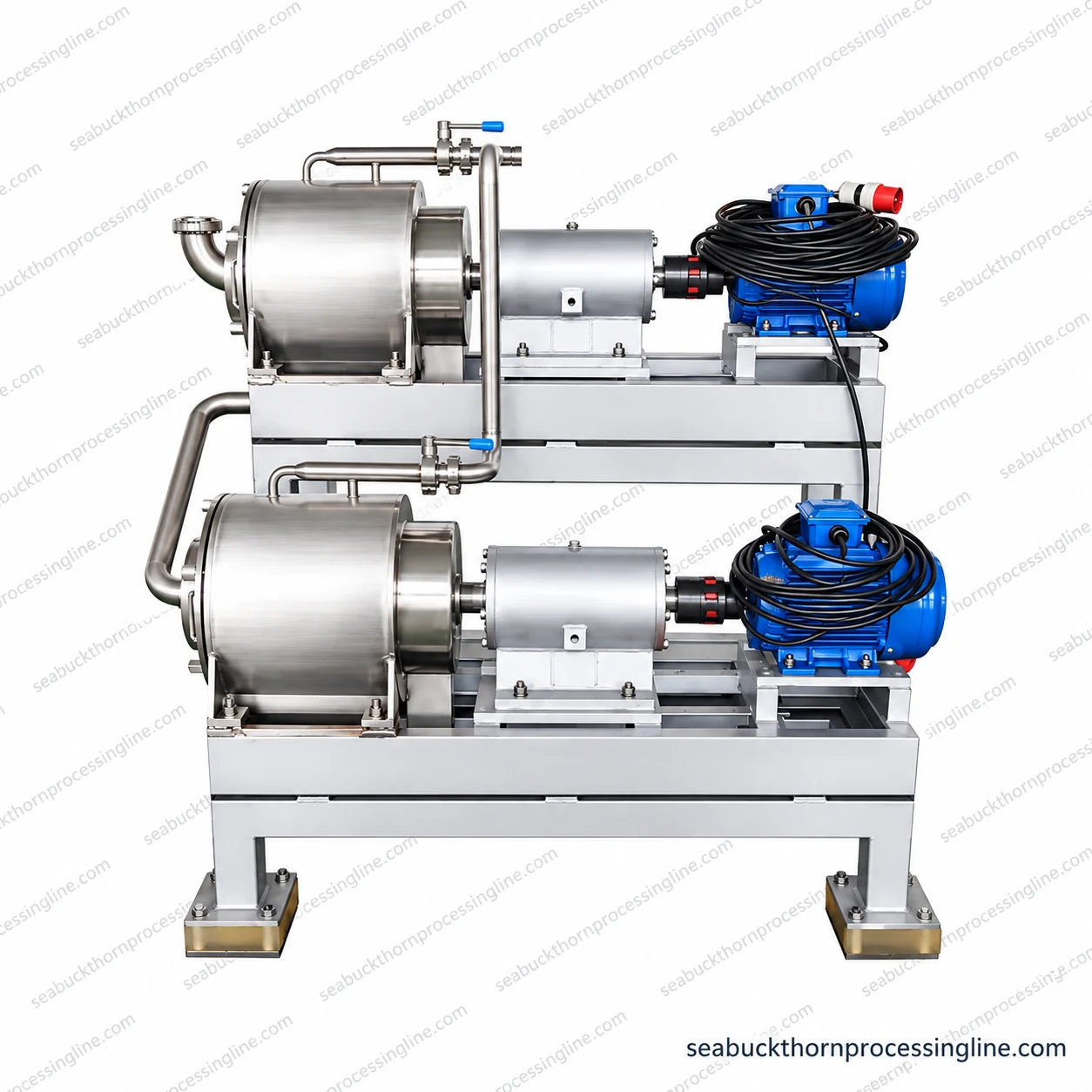
Give each screened stage a defined job
The first stage releases and separates pulp from the prepared feed; the second stage refines the passing stream through its selected screen. The two duties should be matched so that the second stage receives a controllable load rather than an intermittent surge from the first.
Screen aperture alone does not define the result. Berry condition, rotor settings and the residence of material inside the chamber influence pulp passage and seed damage. A smaller opening may change texture while increasing rejection or limiting feed rate. Evaluate the accepted puree and both reject streams together.
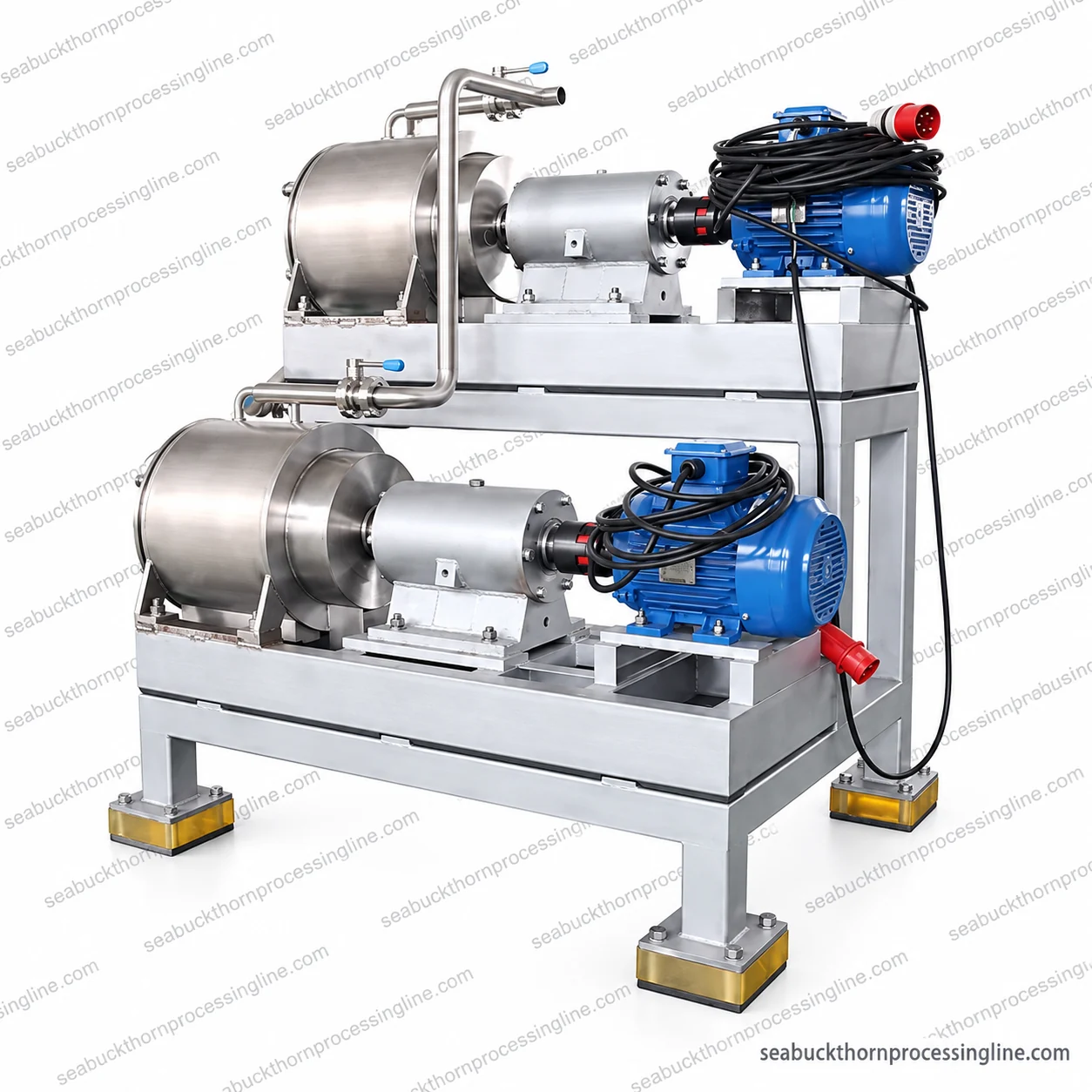
DJ family reference dimensions and installed power
These are generic fruit-processing model references. The listed rates are not verified sea buckthorn throughput, and neither photograph is assigned to a specific DJ model. Select the duty using prepared berry trials, the required screen arrangement and the measured texture of the output.
| Model | Generic reference rate, t/h | Motor power, kW | Dimensions, mm |
|---|---|---|---|
| DJ-3 | 1–3 | 4.0 × 2 | 1550 × 1040 × 1500 |
| DJ-5 | 5 | 7.5 × 2 | 1550 × 1040 × 1500 |
| DJ-10 | 10 | 18.5 × 2 | 1900 × 1300 × 2000 |
| DJ-15 | 15 | 30 + 18.5 | 2400 × 1400 × 2200 |
| DJ-25 | 25 | 45 + 37 | 2400 × 1400 × 2200 |
Measure seeds, puree and rejects separately
A useful trial records the prepared berry mass entering the machine, accepted puree mass, both reject masses and any added liquid. Record the feed temperature and screen configuration alongside those results so that the measurement can be repeated.
Inspect the puree for seed fragments and coarse particles, and inspect the reject for unseparated pulp and broken seeds. A high mass of wet reject is not by itself a low extraction yield: retained liquid and solids composition must be understood before settings are changed.
- Define the texture target using a reproducible sample method.
- Measure seed carryover instead of assuming that every seed remains intact.
- Keep whole-fruit and already-pulped feed results on separate mass-balance bases.
Make screen access part of the layout
Leave room to remove screens and inspect chamber surfaces, seals and residue outlets. Drying pulp around a screen changes subsequent flow and can be mistaken for a feed-quality problem. Follow the agreed cleaning and inspection sequence before returning the machine to service.
Route accepted puree to a suitable process buffer. Keep seed-rich rejects out of closed product piping and give their collection point enough access for regular removal. Downstream clarification is optional and changes the product objective from retained puree texture toward a selected juice fraction.
Further answers
Equipment and process questions
Does the 0.4–1.5 mm range define the final screen choice?
It is a family reference. The two stage apertures and operating settings must be matched to berry condition, acceptable seed fragments, puree texture and the intended feed rate.
Can this machine extract seed oil?
It produces a screened fruit stream and solid rejects. Preparing and extracting oil from separated seeds is a different process and is not a function established for this pulper.