Choose extraction around the product and the seeds
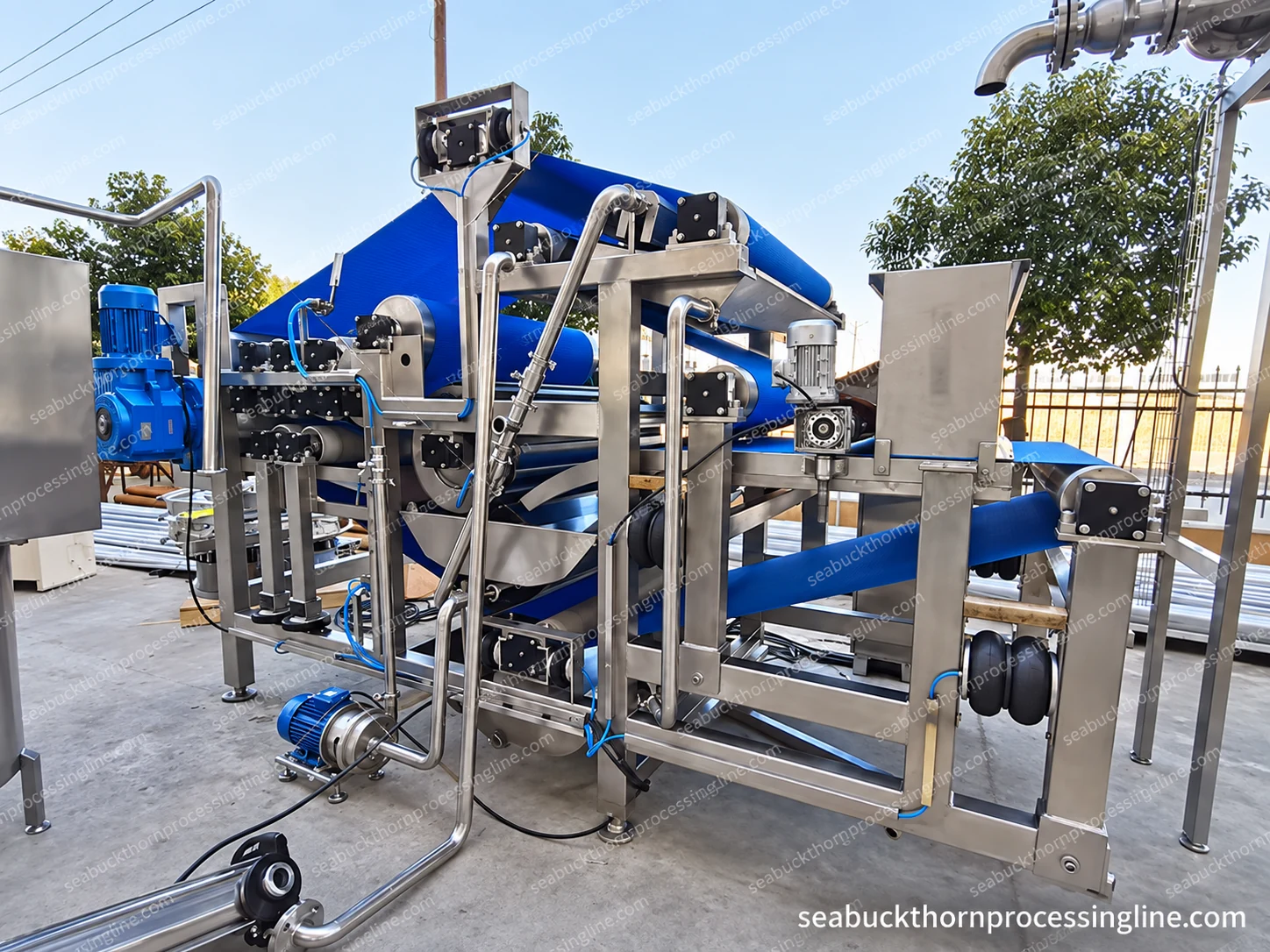
Prepared berries can enter a screened pulping route or a pressing route selected for their condition. The pulper passes acceptable material through a screen while discharging retained coarse matter. A continuous belt press instead develops a cake between moving belts and collects expressed liquid. The two mechanisms produce different feed streams for subsequent separation.
A press installation needs controlled distribution across the belt, an appropriate feed consistency and a route for both liquid and press cake. On either extraction route, seed fragmentation is an operating consideration. Examine the liquid and reject together before increasing mechanical intensity; more extracted mass does not necessarily mean the required juice quality.
Coarse solids and fine clarification are different loads
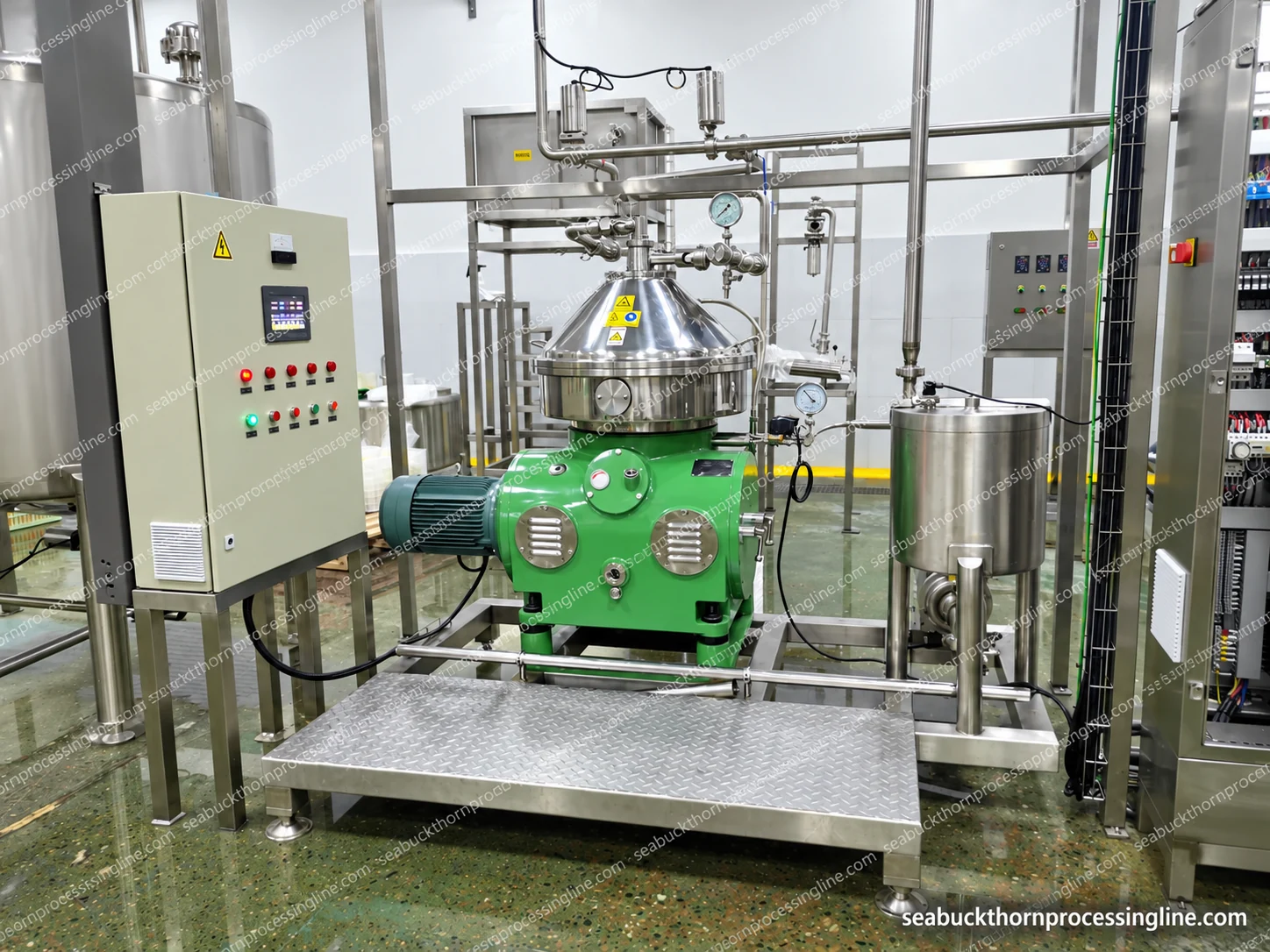
A decanter separates settleable solids in a horizontal rotating bowl, with a differential scroll conveying the collected solids toward discharge. It can form a first solids-removal stage where the extraction stream carries substantial suspended material. Feed rate, solids loading and the selected operating settings must be considered together.
A disc separator uses closely spaced separating surfaces for finer clarification duties. It receives a suitably prepared stream rather than the unselected debris leaving fruit reception. The target is expressed as a measurable product condition and reject stream, not simply the instruction to remove everything. Pulp retained for a cloudy product should not be removed accidentally by copying a clarified-juice setting.
Account for cream, pulp and juice without losing the product
Sea buckthorn juice can develop an oil-rich cream layer and sediment during standing. Product development establishes whether these components are retained in a mixed ingredient or separated into specified streams. Sampling only the middle liquid after settling gives a different picture from sampling a mixed tank.
Where fine clarification is required, controlled enzyme conditioning can alter pectin-related viscosity before separation. The process tank provides time, temperature control and mixing appropriate to the chosen treatment. Enzyme selection and inactivation are developed with the juice specification; they are not mandatory steps for every cloudy juice. Separating an existing pulp-oil phase also requires the correct phase configuration and does not extract oil from intact seeds.
Stabilize flow before thermal treatment and filling
The extracted juice is buffered and transferred at a controlled rate. A vacuum deaerator can be included where dissolved or entrained air affects the chosen processing route. Pressure, temperature, foam behaviour and product carryover are checked together so that the unit removes air without destabilizing the feed to the next machine.
The thermal system, holding section, cooling arrangement and aseptic bag filler are selected as a connected downstream scope. Aseptic filling requires a compatible bag and fitment as well as a prepared sterile product path. Concentration can be added as a separate task when the juice is to become a concentrate; it is not needed simply to make single-strength juice.
Measure extraction, separation and filling on the same basis
The receiving rate is stated as fruit mass, while pumps and downstream equipment may be specified by liquid volume or product mass. Conversion requires the relevant density and temperature. Collect reject, sediment and any separated cream streams during a trial so that a change in juice recovery can be distinguished from a change in retained pulp.
Acceptance should include the agreed appearance and suspended-solids condition, product temperature, stable flow, stop-and-restart behaviour, cleanability and packaging performance. A short burst of flow through a separator is not the sustainable line output. Operating time, cleaning and package changes determine the usable production window.
Further answers
Equipment and process questions
Does every juice line need both a decanter and a disc separator?
No. Their duties are selected from the extraction stream and the intended juice. A decanter can reduce coarse suspended load before finer clarification, but unnecessary separation can remove material that belongs in the product. The final arrangement follows feed trials and the required outlet quality.