Receive & prepare

Move the fruit through washing, elevation and manual inspection before the chosen extraction route.

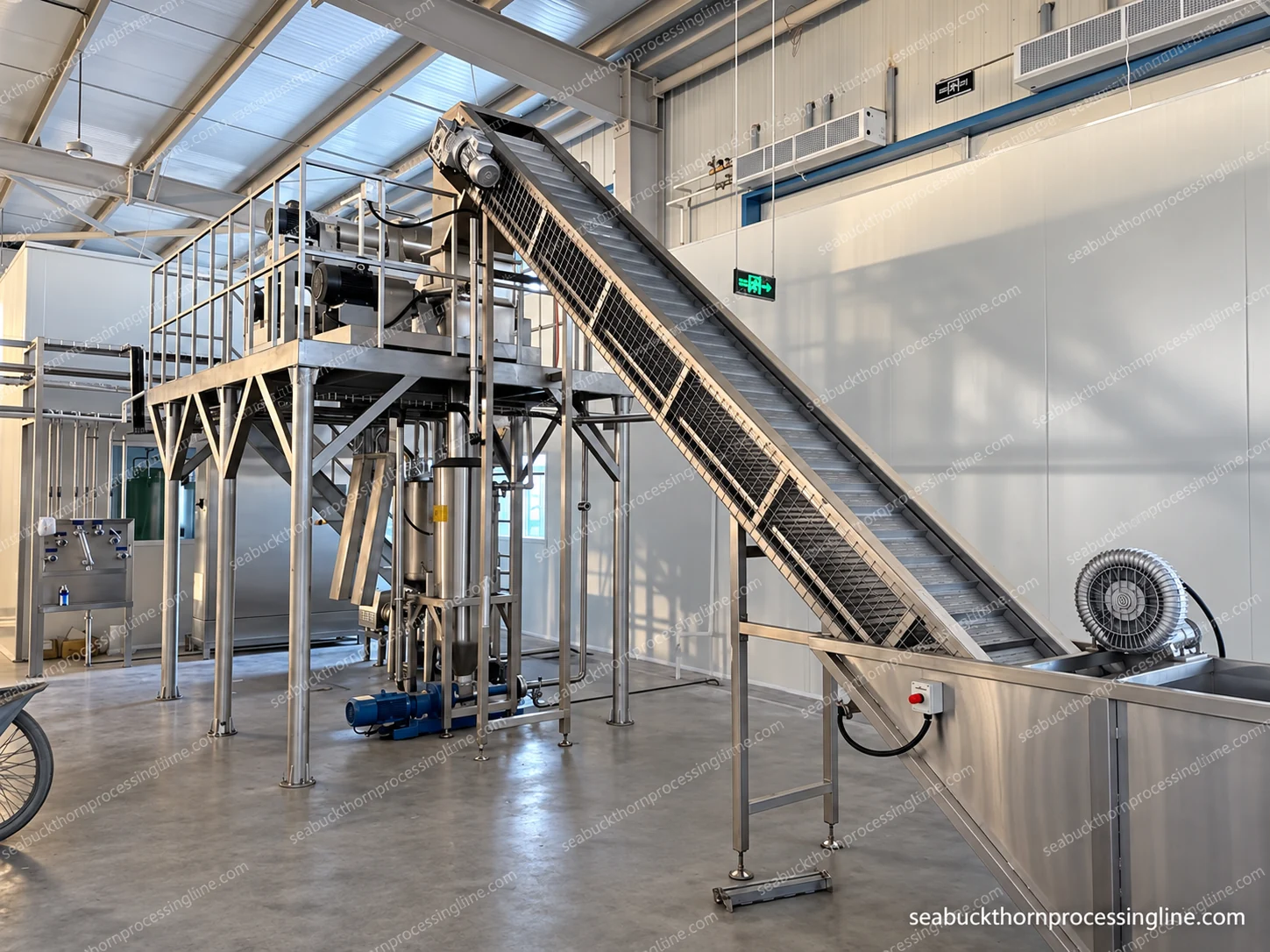
Inclined belt connected to a partly visible wash tank and an elevated platform
Connected washing and elevation arrangement with an inclined cleated belt; the wash tank is partly outside the frame.

Receiving and preparation

Washing and elevation for berry preparation

Bring prepared berries from the wet preparation area to a controlled discharge height. The connected wash-and-lift arrangement combines a washing interface with an inclined belt, so water carryover, berry retention and the transfer into inspection are addressed as one duty.
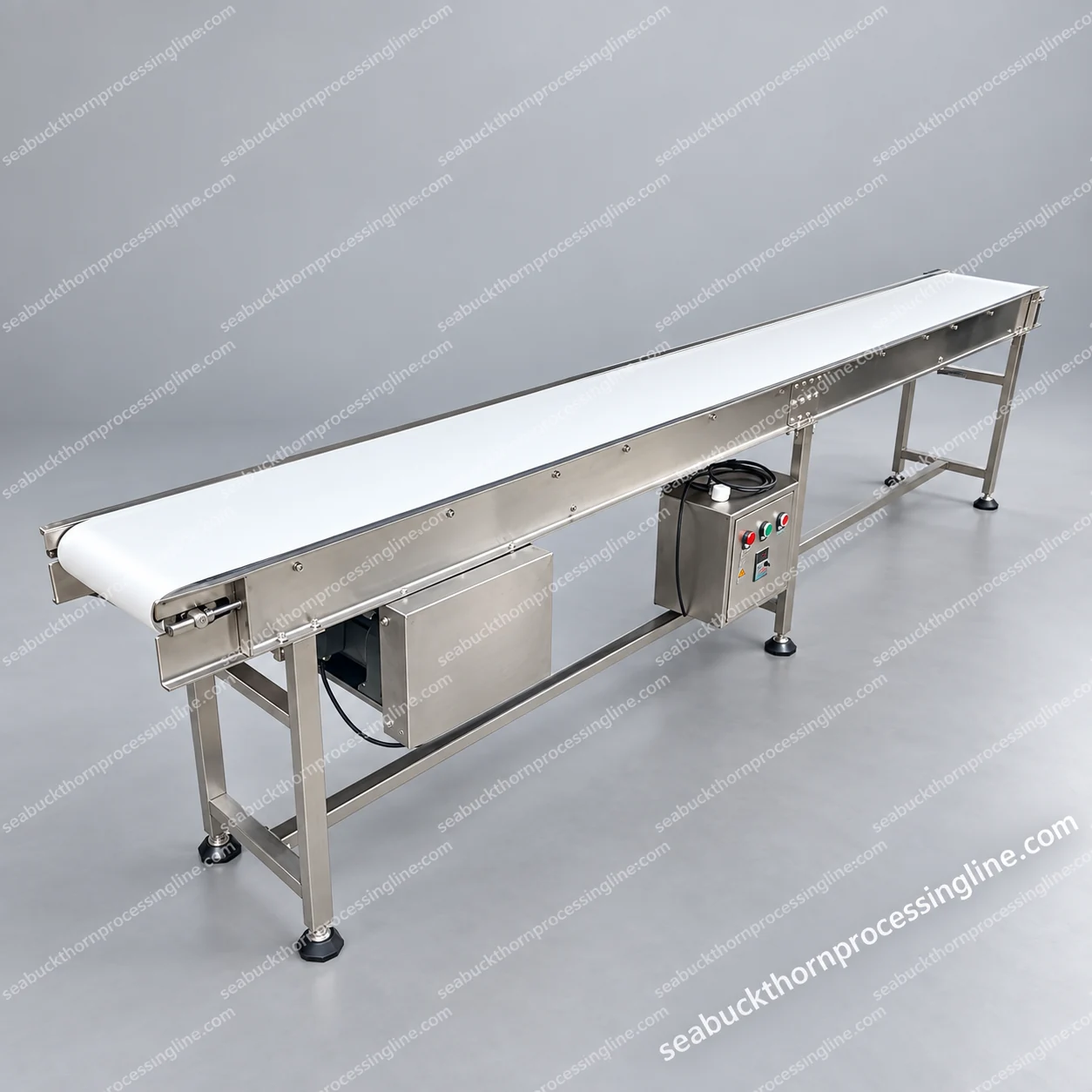
Long smooth white belt with side rails, support legs and a local control box
Smooth inspection belt with side rails and adjustable support legs.

Visible sorting station

Manual inspection before berry extraction

A smooth belt spreads the prepared berry feed across an accessible inspection area. Operators can remove visible foreign matter and unsuitable fruit before pulping or pressing. The station works through presentation and access: an overloaded belt conceals defects that a longer conveyor alone cannot solve.

Extract & finish

Choose screened pulping or belt pressing for the ingredient you intend to produce.

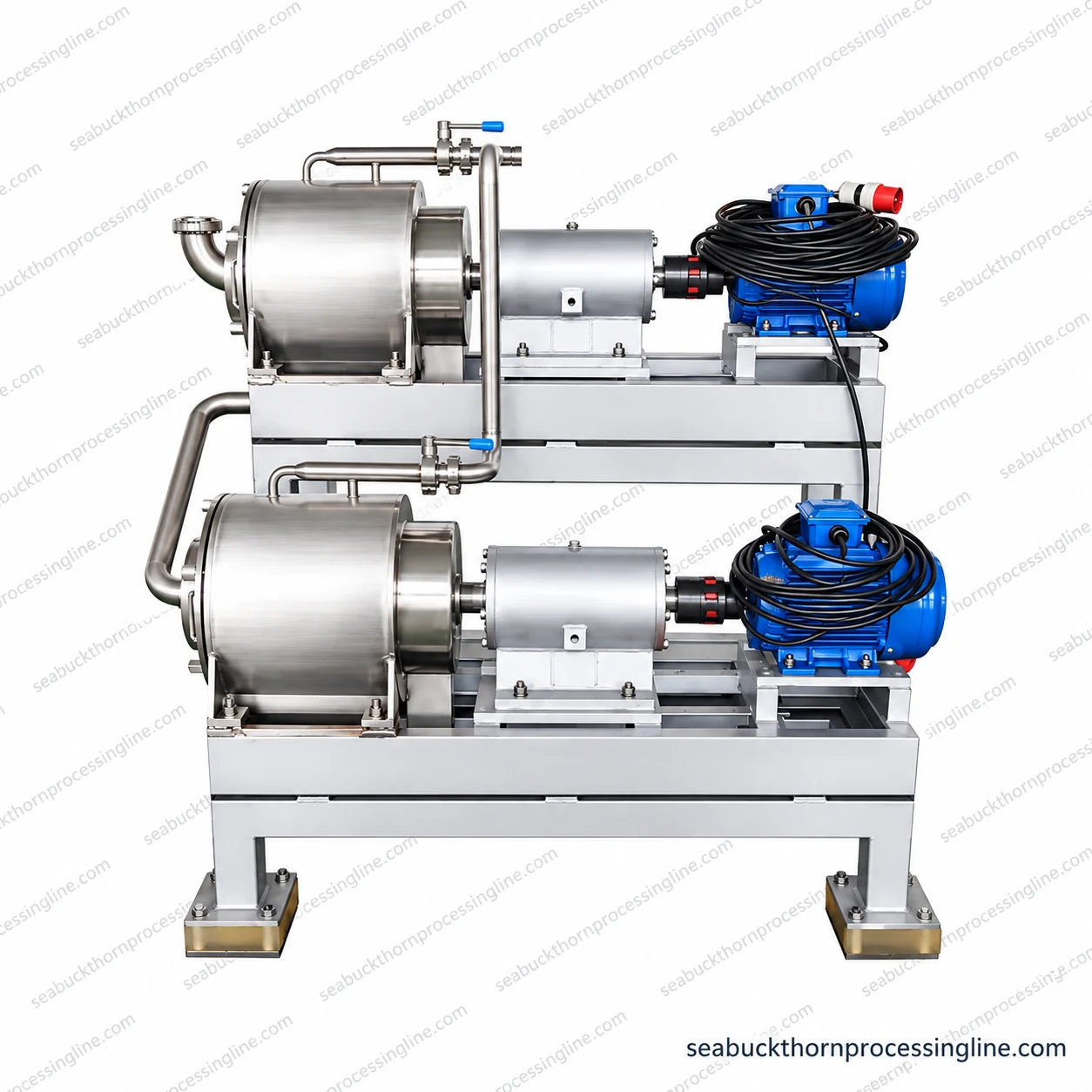
Stacked pulping and finishing chambers with two motors on one frame
Combined two-stage pulper and finisher with separate drives for the two chambers.

Pulp release and screening

Two-stage pulper and finisher

Two screened stages in one frame combine pulp release with a second finishing pass. This arrangement is a candidate for a screened sea buckthorn puree route where the accepted texture, seed carryover and reject stream are evaluated together. It is one combined machine, not two separate equipment items.

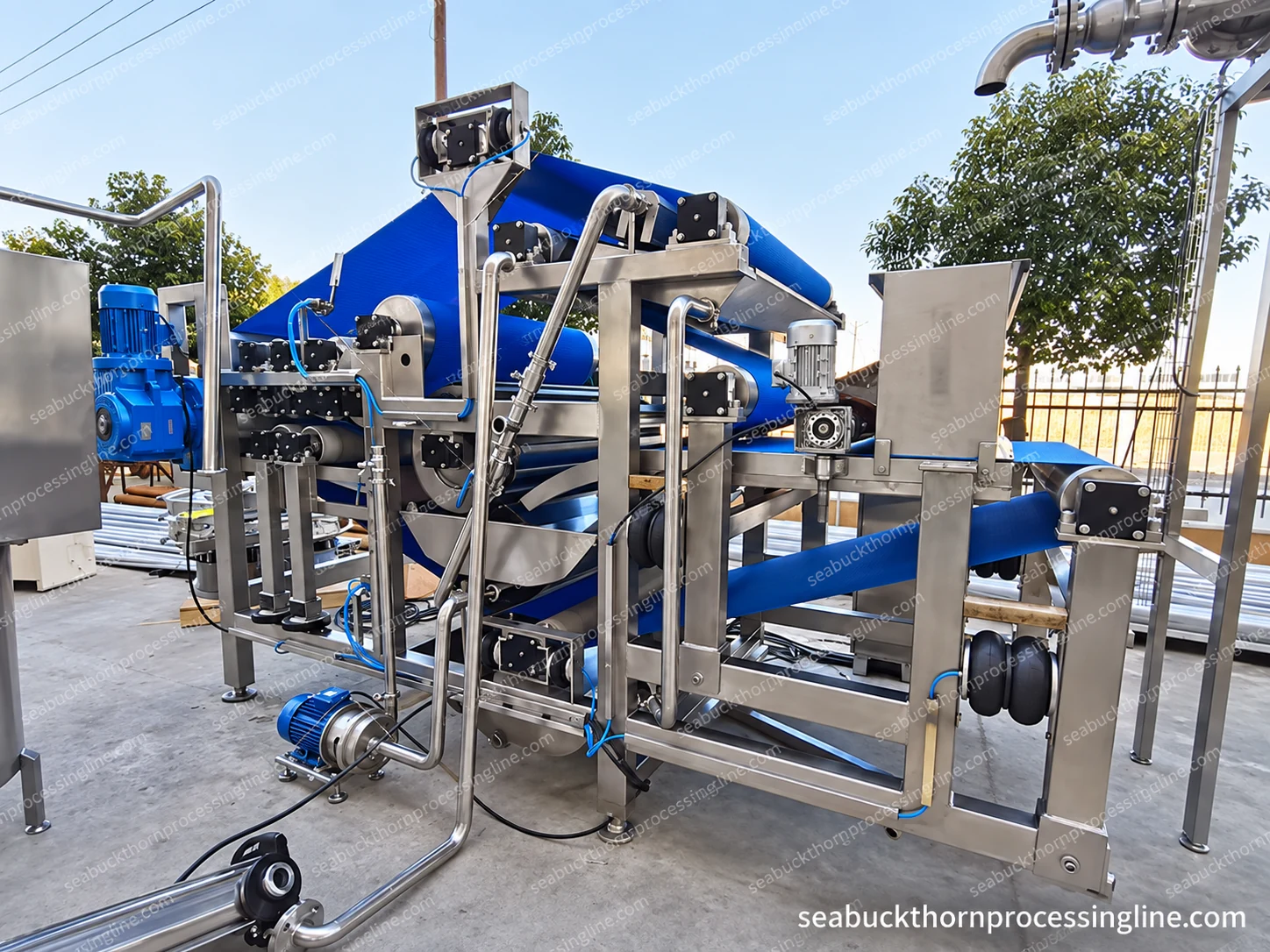
Fruit belt press with blue belts, rollers, stainless frame and collection hardware
Continuous fruit belt press with visible belt paths, rollers and access around the frame.

Pressing route for juice

Continuous fruit belt press

A belt press extracts a liquid fraction as prepared fruit travels between moving belts and progressively loaded rollers. For sea buckthorn juice, the feed must form a workable draining layer. Compare this route with screened pulping using actual fruit condition, juice character and the handling of the pressed cake.

Separate & handle

Match solids separation, buffering and air removal to the actual pulp or juice.

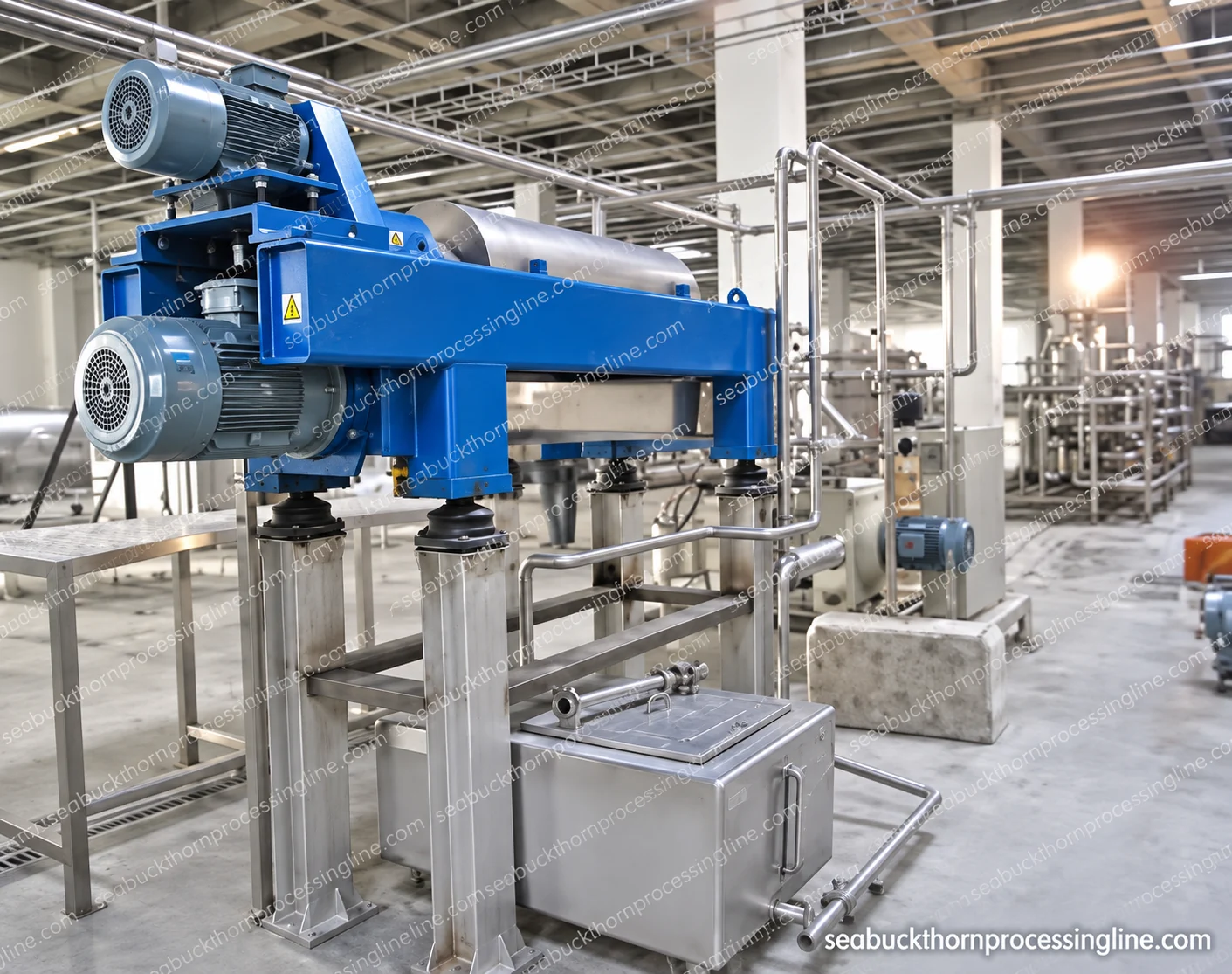
Horizontal enclosed decanter with blue drive housing and raised support legs
Horizontal decanter installation with an enclosed bowl housing and external drive arrangement.

Centrifugal solid–liquid separation

Decanter for a controlled solids split

A horizontal decanter separates settleable solids from a flowing fruit stream. Its rotating bowl and internal scroll support continuous separation into liquid and solids streams. Use it where the next stage needs a more controlled solids load, and define how much pulp the accepted liquid should retain.

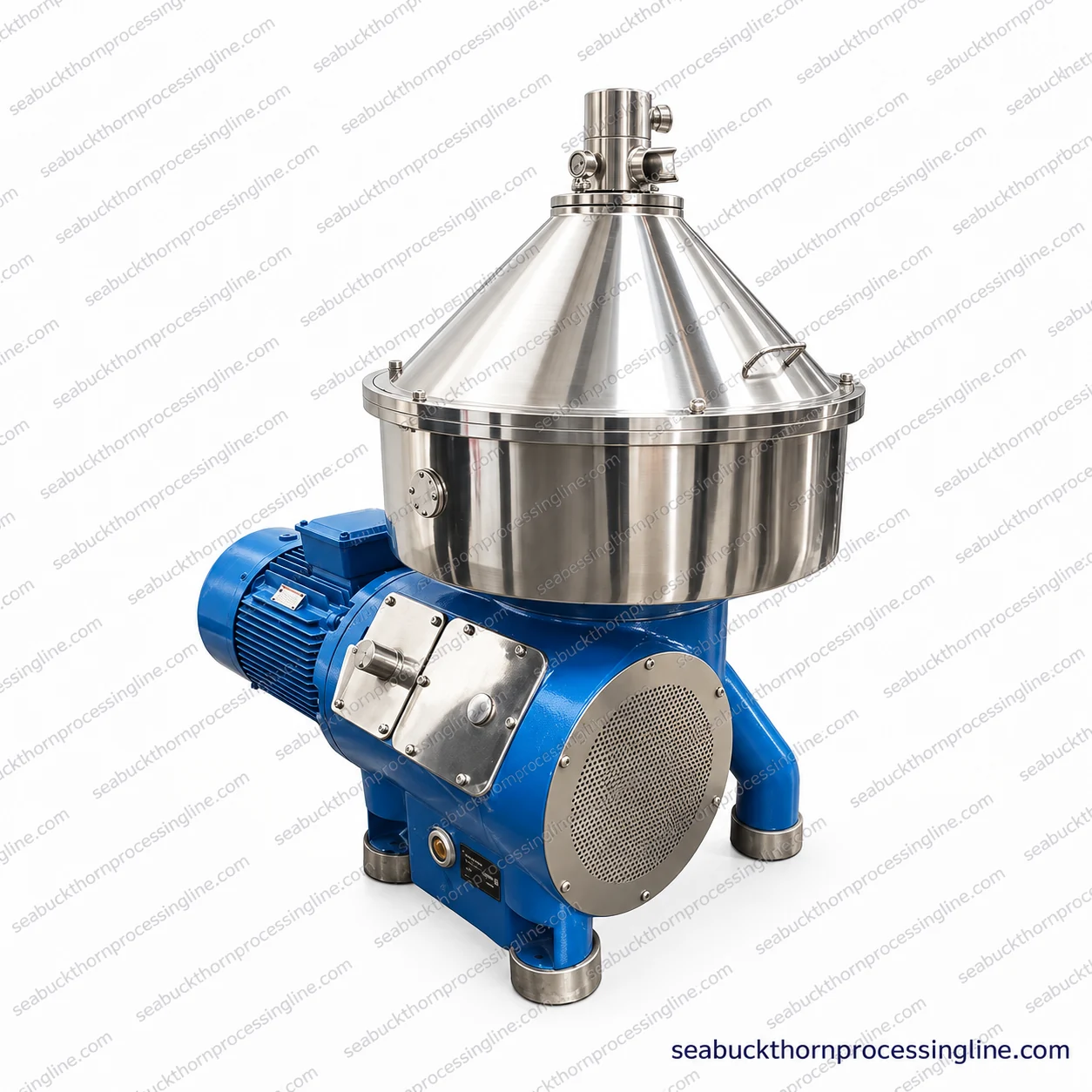
Disc separator with a stainless conical bowl enclosure on a blue drive base
Disc separator exterior with its drive base and top process connections.

Fine separation duty

Disc separator for selected juice clarification

A disc stack provides closely spaced settling surfaces inside a rotating bowl. It can be considered for clarification after upstream preparation has brought the solids load under control. Choose the bowl and outlet arrangement for the required clarification or phase-separation duty, with an agreed composition for each collected stream.

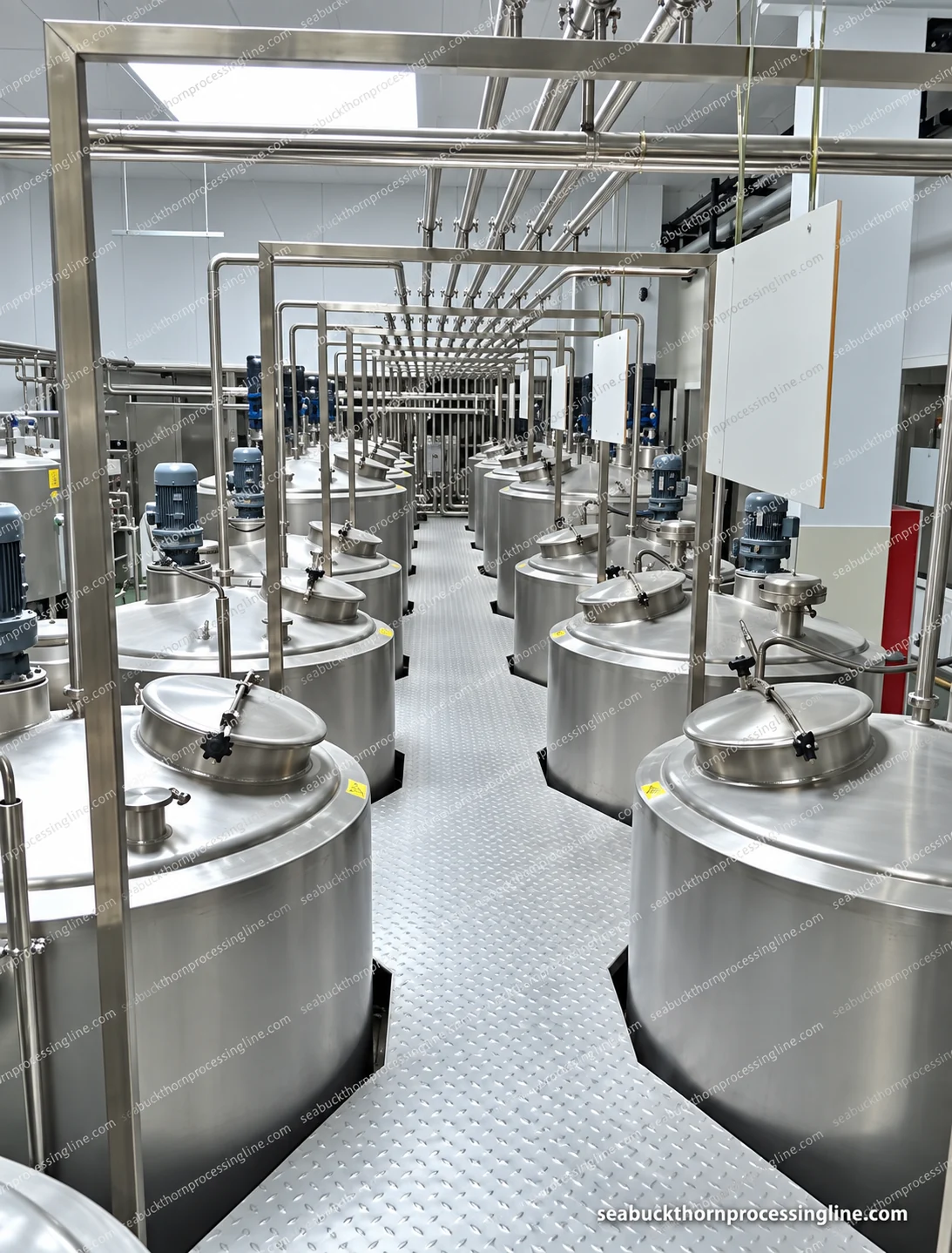
Rows of closed process vessels with top drives and shared overhead piping
Closed process vessels with top drives, access lids and shared overhead pipework.

Between extraction and finishing

Process tanks, buffers and hygienic transfer

Process vessels connect operations that do not run at exactly the same rate. A short buffer can steady the feed to separation or thermal treatment; a treatment vessel can provide a controlled batch step. These duties need different volume and mixing decisions even when their external tank shapes look similar.

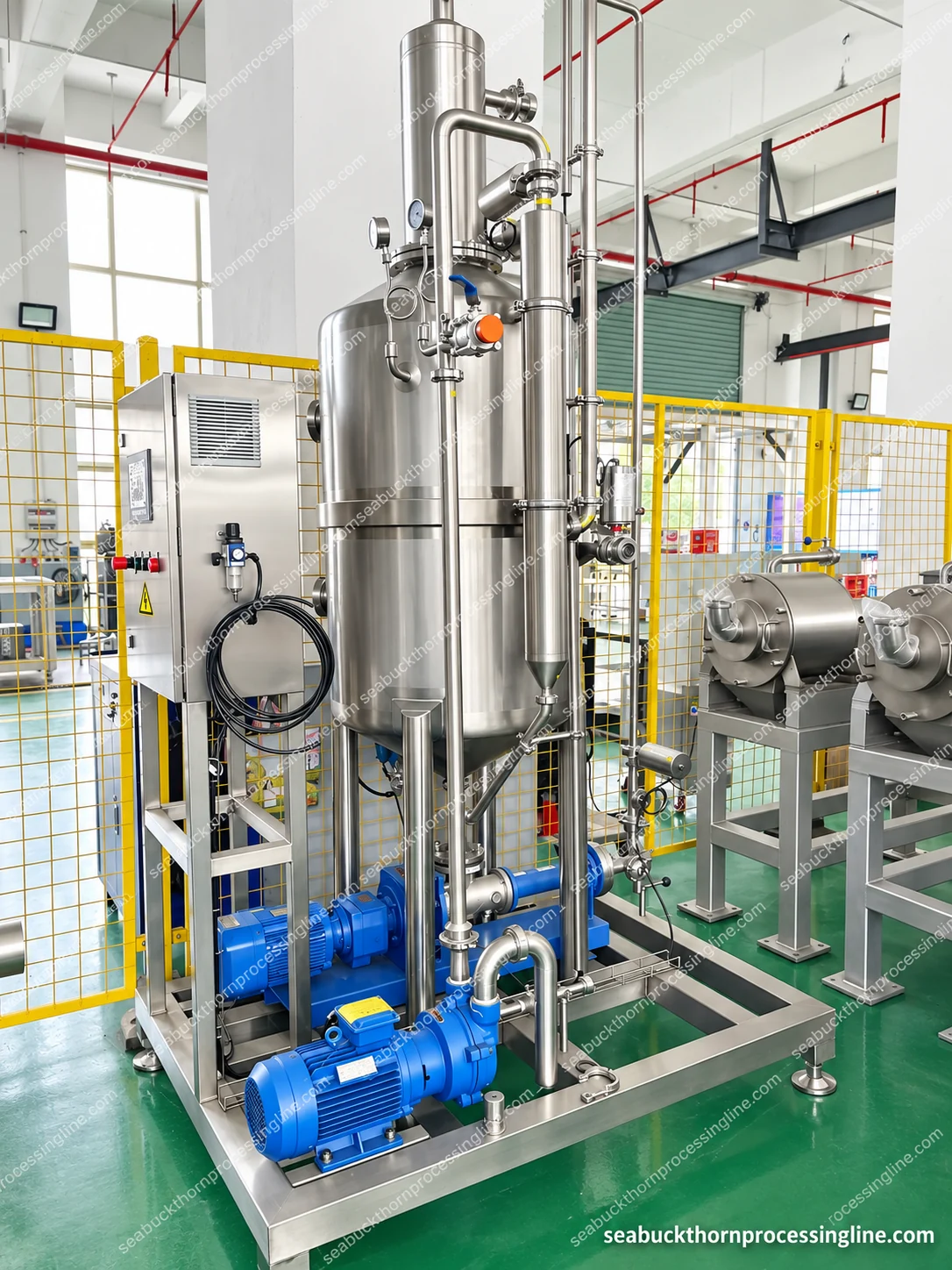
Vertical vacuum deaeration vessel with upper condenser structure, sight glasses, pumps and a control cabinet
Vacuum deaeration assembly with a vertical vessel, upper structure, instruments and skid-mounted pumps.

Optional air-removal step

Vacuum deaeration before downstream processing

Vacuum deaeration exposes the product to reduced pressure to release entrained air and reduce dissolved gas under selected conditions. It can be evaluated where air pickup affects downstream processing. The appropriate duty depends on the product state and the measured benefit, rather than adding the vessel to every line.

Concentrate, treat & pack

Connect water removal, thermal processing and bulk packaging with suitable cleaning circuits.

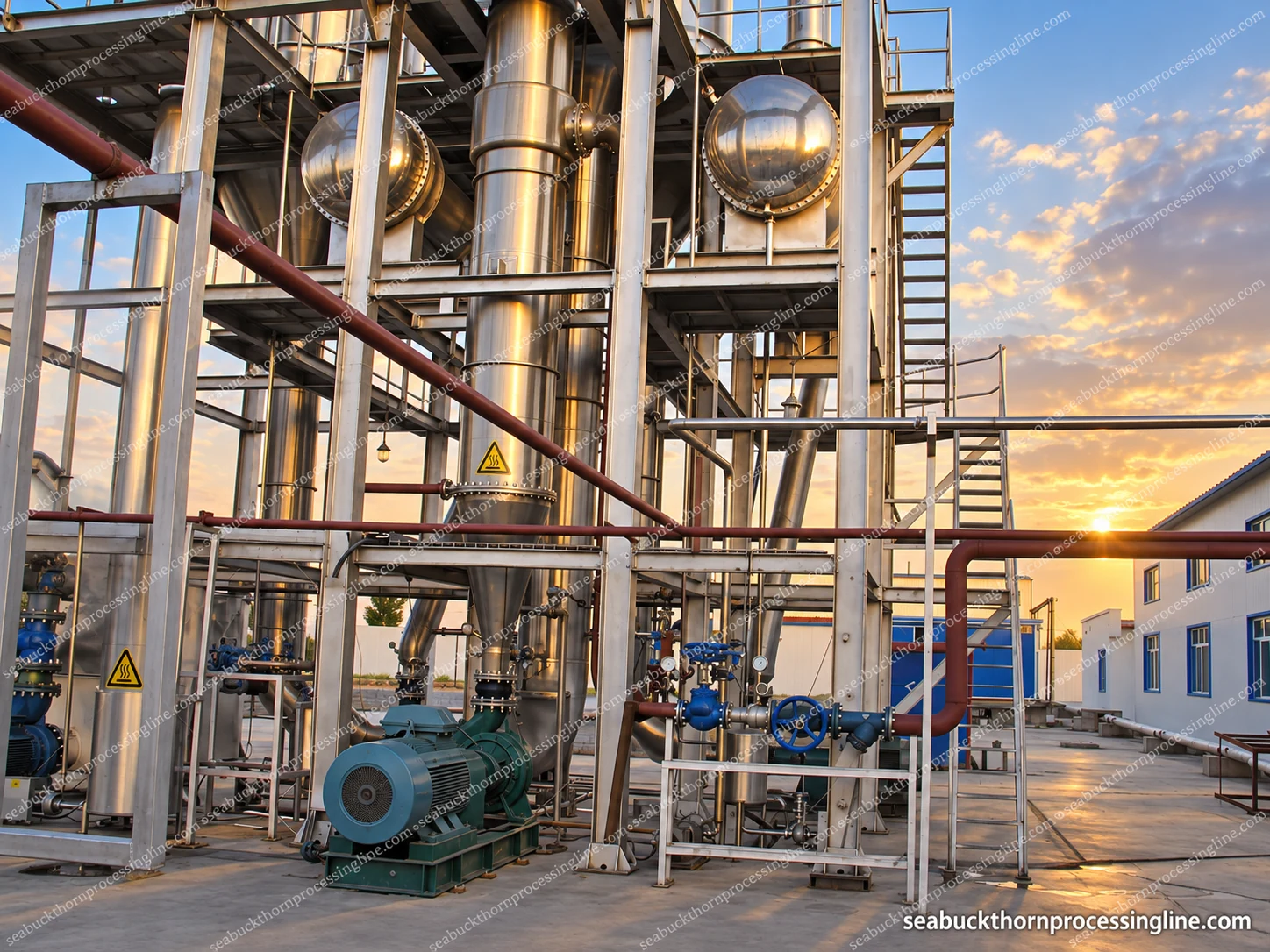
Tall industrial evaporation vessels and tubular bodies with pumps and an access platform
Industrial evaporation assembly with tall process bodies, access structure and lower pumping connections.

Water-removal duty

Vacuum concentration matched to the product

Concentration removes water from a defined juice or pulp stream. Feed composition and the required concentrate determine the duty, while viscosity and fouling determine how the product should pass through the heated system. A clarified juice and a pulp-rich stream therefore need separate assessments.

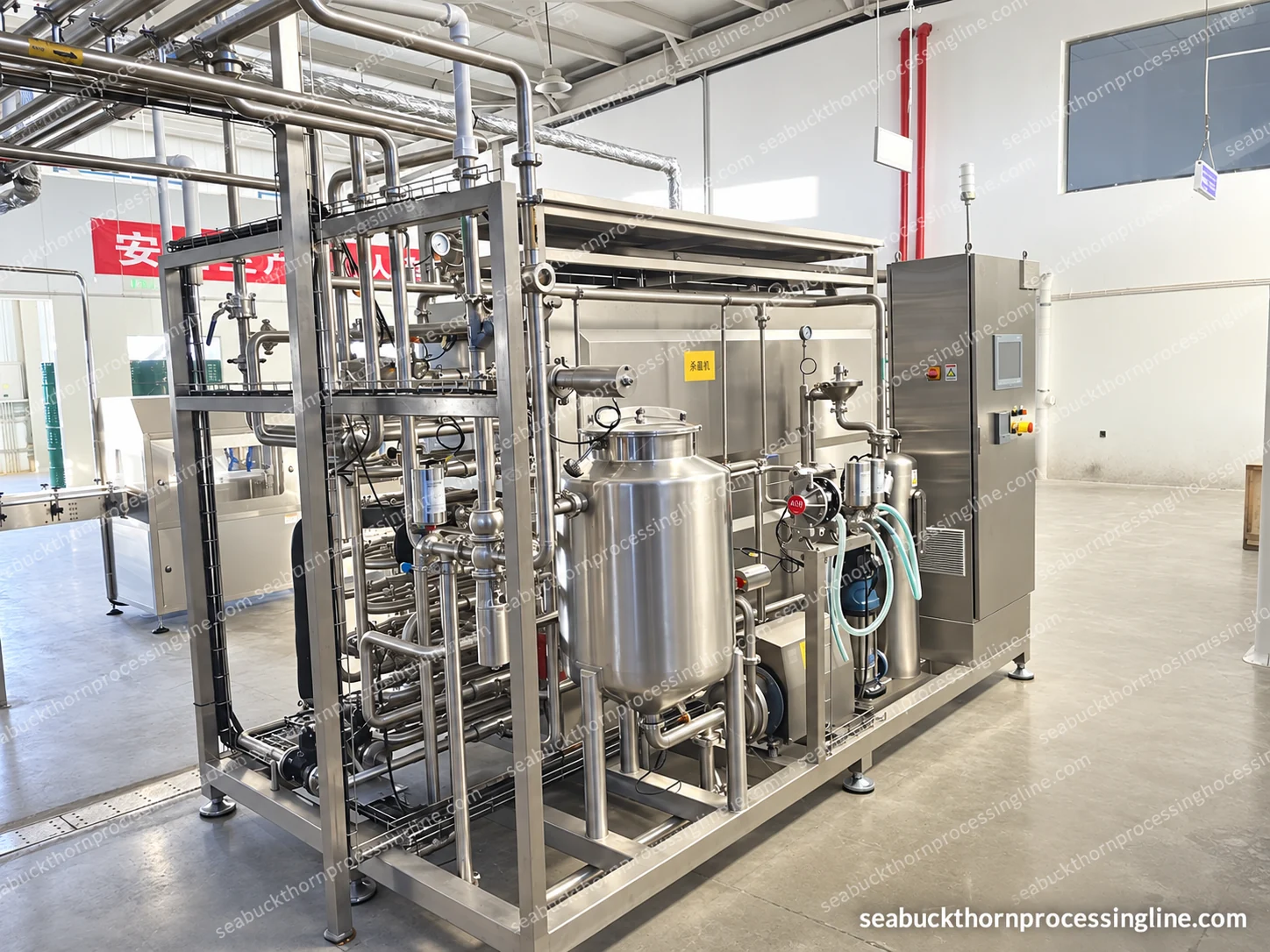
Tubular thermal-treatment skid with horizontal tube banks, a central vessel, valves and a control cabinet
Tubular thermal skid showing tube banks, a central vessel, instruments and the control cabinet.

Heating, holding and cooling

Tubular thermal-treatment skid

A tubular thermal system brings a defined product stream through heating, a selected holding arrangement and cooling. Its passages and controls must suit the particles and viscosity of the sea buckthorn product. The operating schedule is established for the product and package route, then translated into equipment duty.

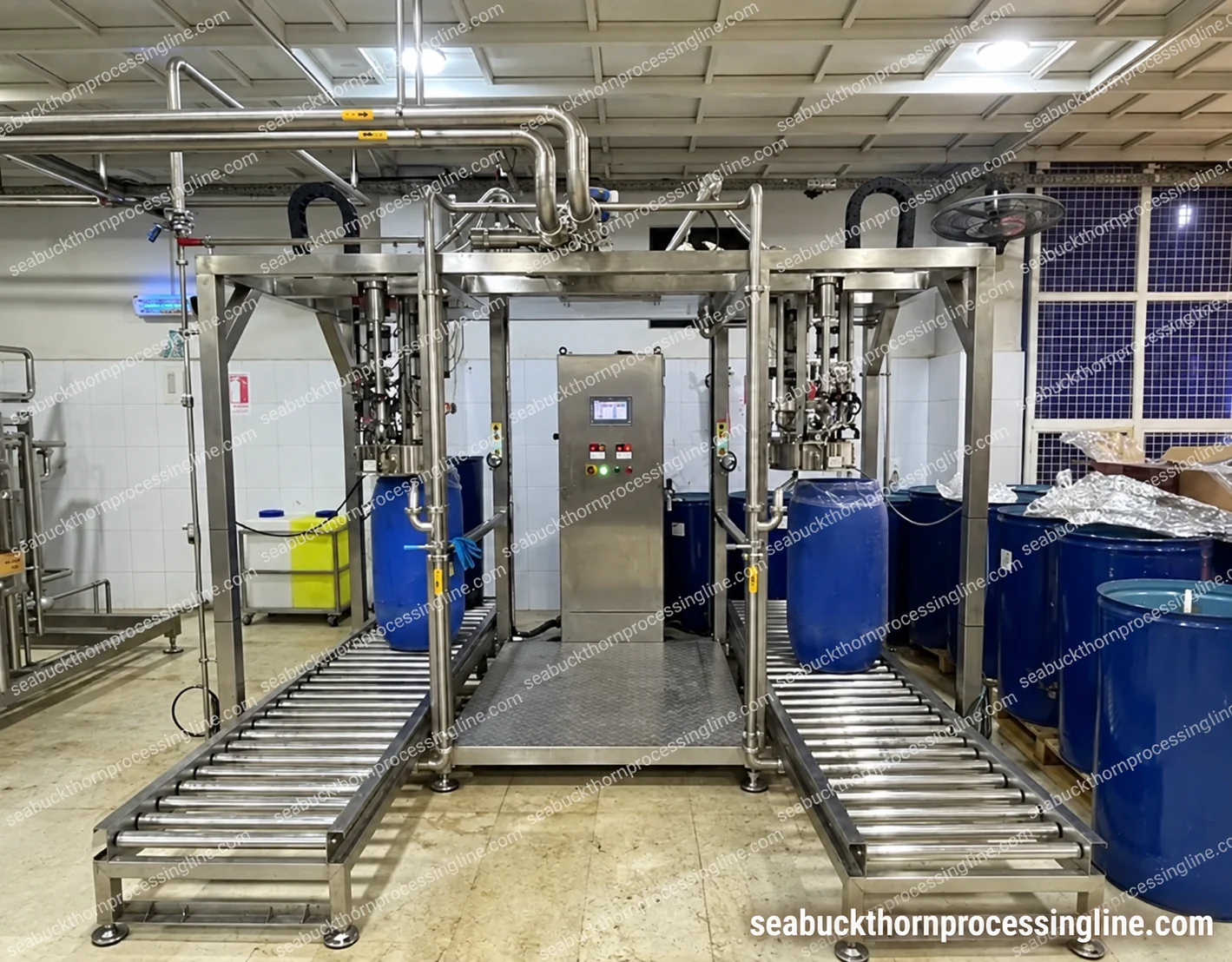
Two bag-in-drum filling positions with blue drums, roller tracks and a central control panel
Two filling positions with drum roller lanes and central controls.

Processed product to bulk package

Aseptic bag filling for bulk products

Aseptic bag filling receives suitably processed product through a maintained hygienic connection and fills a compatible package. The illustrated arrangement has two drum positions and roller tracks. Selection centers on the bag fitment, product flow and filling cycle, together with the upstream thermal process.

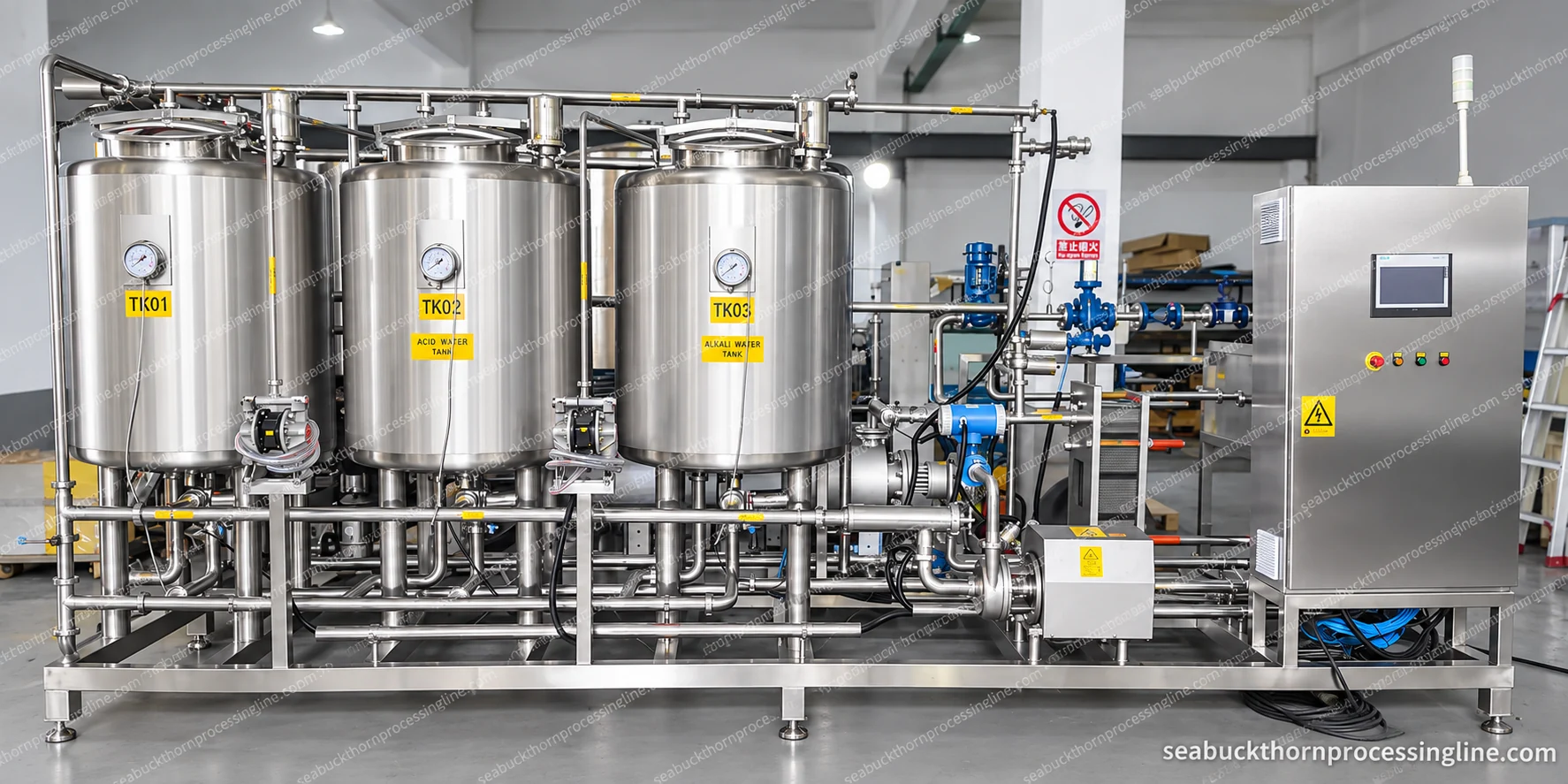
Three-tank CIP skid with pumps, pipework, a heating section and a control cabinet
Three visible tanks with circulation pipework, pump and control equipment.

Cleanable circuits and defined return paths

CIP supply and return system

A CIP system prepares and circulates cleaning media through selected closed product circuits. It connects tanks, pipework and process equipment through a planned supply and return route. The cleaning duty must reflect the actual soil, circuit geometry and equipment instructions, including the parts that require separate access.

The next step in your process

Put the equipment scope together.

Discuss the ingredient, the incoming material and the part of the line you want to build.

Talk about your project →
Explore equipmentEnquire about your project ↗