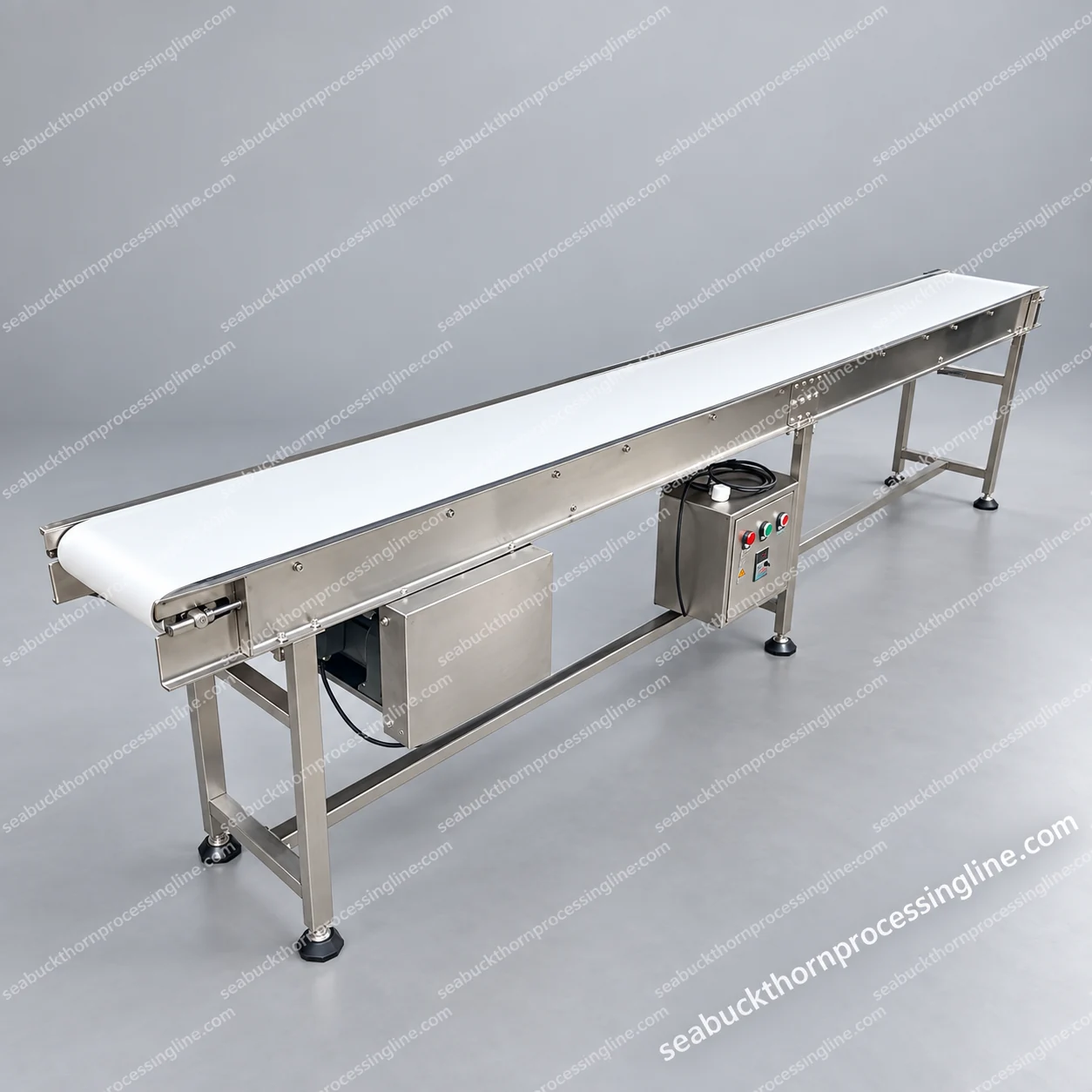
Expose the fruit that must be inspected
Feed the belt evenly across its usable width rather than depositing a deep central pile. For small sea buckthorn berries, a shallow presentation helps operators distinguish loose debris and damaged fruit without reaching through layers of product.
The feed chute and discharge transfer need as much attention as the straight belt. Material accumulating against a rail can fall back into the accepted stream after the main inspection zone. Define where rejects are placed and how those containers are removed.
Arrange access around the belt
The photographed machine has a long open belt, side rails, a covered drive area and local controls. Operator positions, lighting and reject collection belong in the layout around that machine. They should not obstruct the belt return or service access.
Where a wet preparation section feeds inspection, control drainage before the operator area. Water spreading across the belt can change berry movement and carry debris through the discharge. Coordinate belt speed with the extraction inlet to prevent alternating surges and empty running.
Size the station by presentation as well as flow
| Selection point | Why it matters | Check on representative berries |
|---|---|---|
| Loading depth | Visibility of defects and foreign matter | Observe the most heavily loaded belt area |
| Inspection length and access | Time and reach available to operators | Trial the planned staffing and belt setting |
| Transfers and side rails | Loss of small berries and debris accumulation | Inspect corners and gaps during normal flow |
| Wet-area exposure | Drainage and cleaning access | Check the return belt and covered drive area |
Keep inspection separate from automated sorting claims
This is a manual inspection conveyor. Cameras, air ejectors and automatic grading are not part of the illustrated configuration. If a particular defect cannot reliably be removed by the proposed inspection method, address it as a separate preparation requirement.
At shutdown, remove debris from the belt edges, discharge and underside before cleaning. Restore guards and confirm that the control location remains accessible after reject bins and other handling equipment are positioned.
Further answers
Equipment and process questions
Is this an optical sorter?
No. The illustrated unit provides a belt for manual inspection. An optical inspection specification would require its own sensors, reject mechanism and defect acceptance trial.
Is belt width enough to define the capacity?
No. Berry loading depth, the defects to remove, operator access and the downstream feed pattern all affect the useful inspection rate.