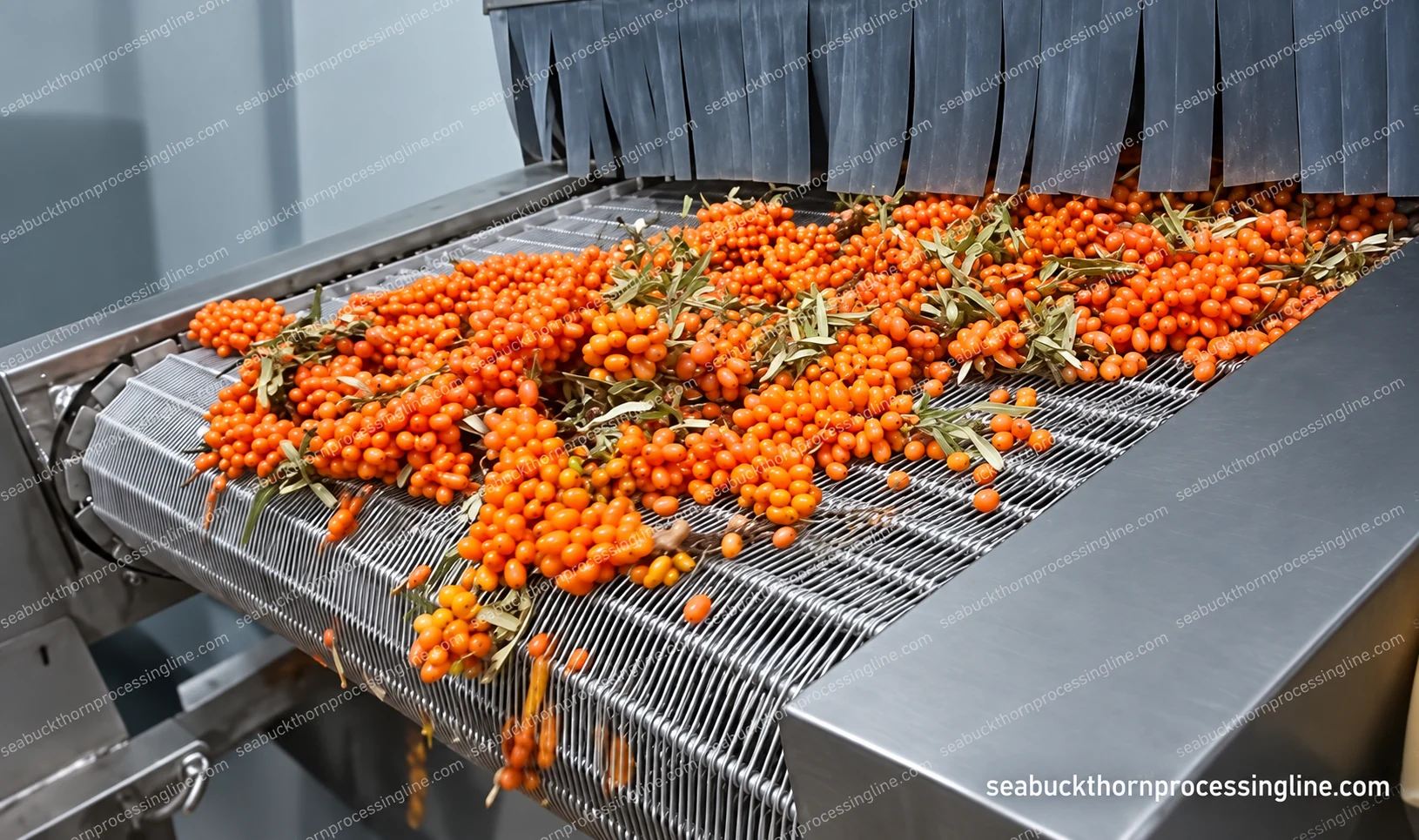
Fresh berries: retain fruit while removing unwanted material
Reception and inspection separate sound fruit from unsuitable berries and accessible foreign matter. Conveyor gaps, transfer drops and water movement should be considered at the scale of the berry, rather than copied from a large-fruit line. A twig that passes the first transfer can later obstruct a feed throat or load a screen.
Washing is followed by controlled drainage. Water carried into extraction changes the measured incoming mass and may dilute the collected product. Record the receiving and weighing point consistently, inspect retained debris and keep clean fruit from contact with dirty return water or reception surfaces.
Frozen berries: temperature and clump size become feed variables
A frozen ingredient may arrive as loose berries, partly consolidated fruit or dense blocks. The preparation step must deliver material in a condition that the metering and extraction equipment can handle. Check representative deliveries rather than treating the package description as a guarantee of free flow.
Controlled preparation includes collection of released liquid, management of residence time and an identified route into extraction. Unevenly prepared material can alternate hard pieces with thin liquid, changing load and product flow. Hygienic handling and the allowable storage period remain part of the product process; an extraction machine is not a thawing system.
Prepared pulp: start with a transfer specification
Existing pulp or juice enters at receiving and buffering. Its packaging, discharge method, temperature, viscosity and particle content determine how it reaches the next machine. Incoming material may need mixing to restore the specified sampling condition before measurement or transfer.
The incoming hygienic condition determines the boundary to the new module. Product from a conventional tank is not an aseptic supply simply because the receiving pipe is closed. Define where treatment occurs, where product can wait and how a stoppage or cleaning cycle separates the existing plant from the extension.
Keep receiving checks comparable across the season
Use consistent sample preparation when comparing lots: identify the fruit state, sample temperature, mixing condition and measurement point. Differences in initial debris, thaw loss or suspended pulp can otherwise appear to be changes in equipment performance.
A useful trial preserves samples of incoming material, accepted product and rejects. Compare texture, seed condition, flow behaviour and recoverable product alongside the mass record. These observations inform the equipment settings and interfaces without requiring every arriving batch to have identical fruit composition.