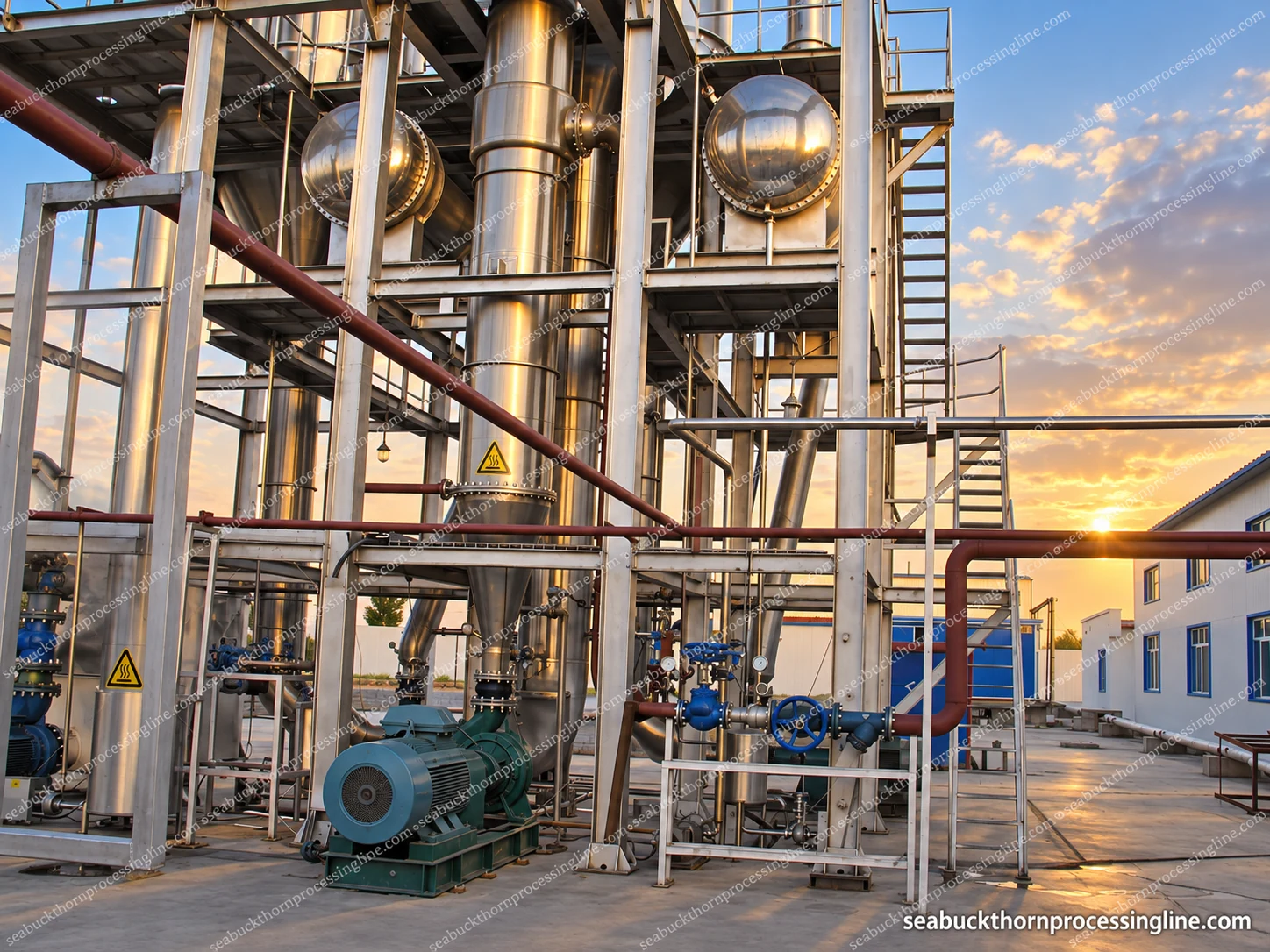
Begin at the actual transfer point
An existing extraction section may deliver continuously, in batches or from thawed ingredient containers. The new module starts at a documented transfer point with known temperature, solids, particle distribution and available pressure. A buffer and transfer arrangement reconciles these conditions with the evaporator or thermal system.
The interface also has a hygienic state. A conventional product tank and an aseptic product supply are different connections. Specify how incoming product is received, how the supply is interrupted during cleaning, and which side controls the transfer. If only thermal treatment and filling are required, the evaporator can be omitted from the module.
Select the evaporator for the product through the run
Evaporation removes water under controlled pressure and temperature. A falling-film arrangement suits an appropriate flowing liquid that can distribute and wet the heating surface. Where viscosity, solids or fouling require stronger circulation, the circulation arrangement and heat-transfer geometry become central to selection. The product at the concentrated outlet may behave very differently from the original juice.
Feed rate, initial and final concentration, losses and any other material streams define the water-removal duty. Soluble-solids readings are useful process measurements, but a pulpy or oily product needs an agreed measurement basis. A Brix value should not silently replace total solids in a solids-conservation calculation.
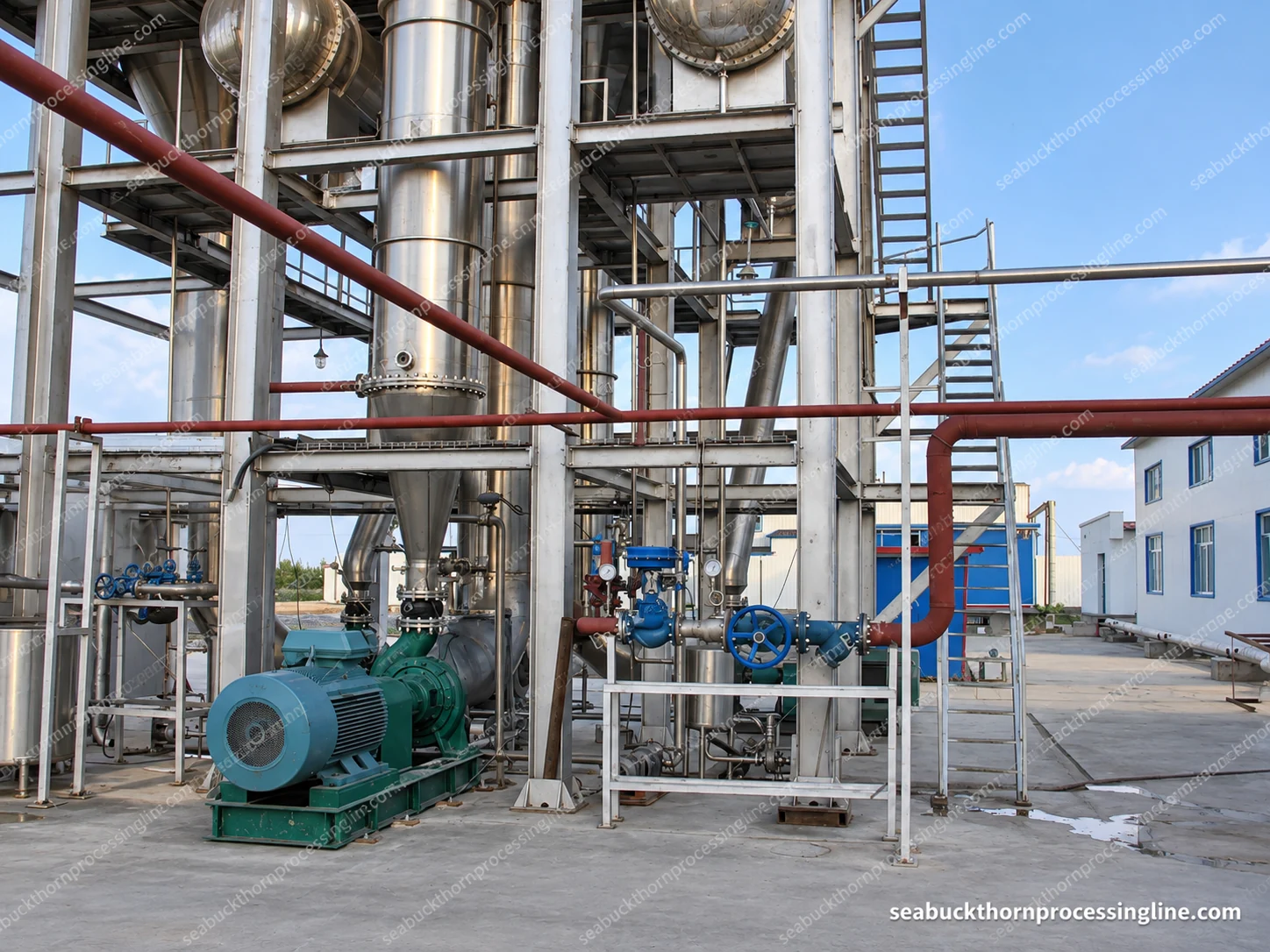
Connect the heat and cooling duties to available utilities
A concentration module needs a heat supply, vapour handling, condensate management and a cooling arrangement matched to the vacuum system. These duties are evaluated at the intended operating point, including the effects of inlet temperature and the required production window. An effect count alone is not a complete energy specification.
Product quality also depends on exposure through the whole system: waiting in a tank, recirculation, heating, holding and cooling. Air ingress and foam can affect operation and increase product carryover. Assess these behaviours with representative juice or puree instead of relying only on a water run.
Match the concentrated product to heat treatment and filling
A thermal system downstream of concentration must handle the final viscosity and any retained particles. The required holding and cooling conditions are developed for the product and its packaging route. Piping, valves and the filler inlet must preserve the required hygienic boundary after the validated process.
For bag-in-drum or other compatible aseptic bags, head configuration, fitment, dose measurement, bag presentation and package movement determine filling operation. Available bag sizes are configuration choices, not an assumption that one installed head handles every format. Package change time and the output of the upstream process must be reconciled to avoid unnecessary hot-product holding.
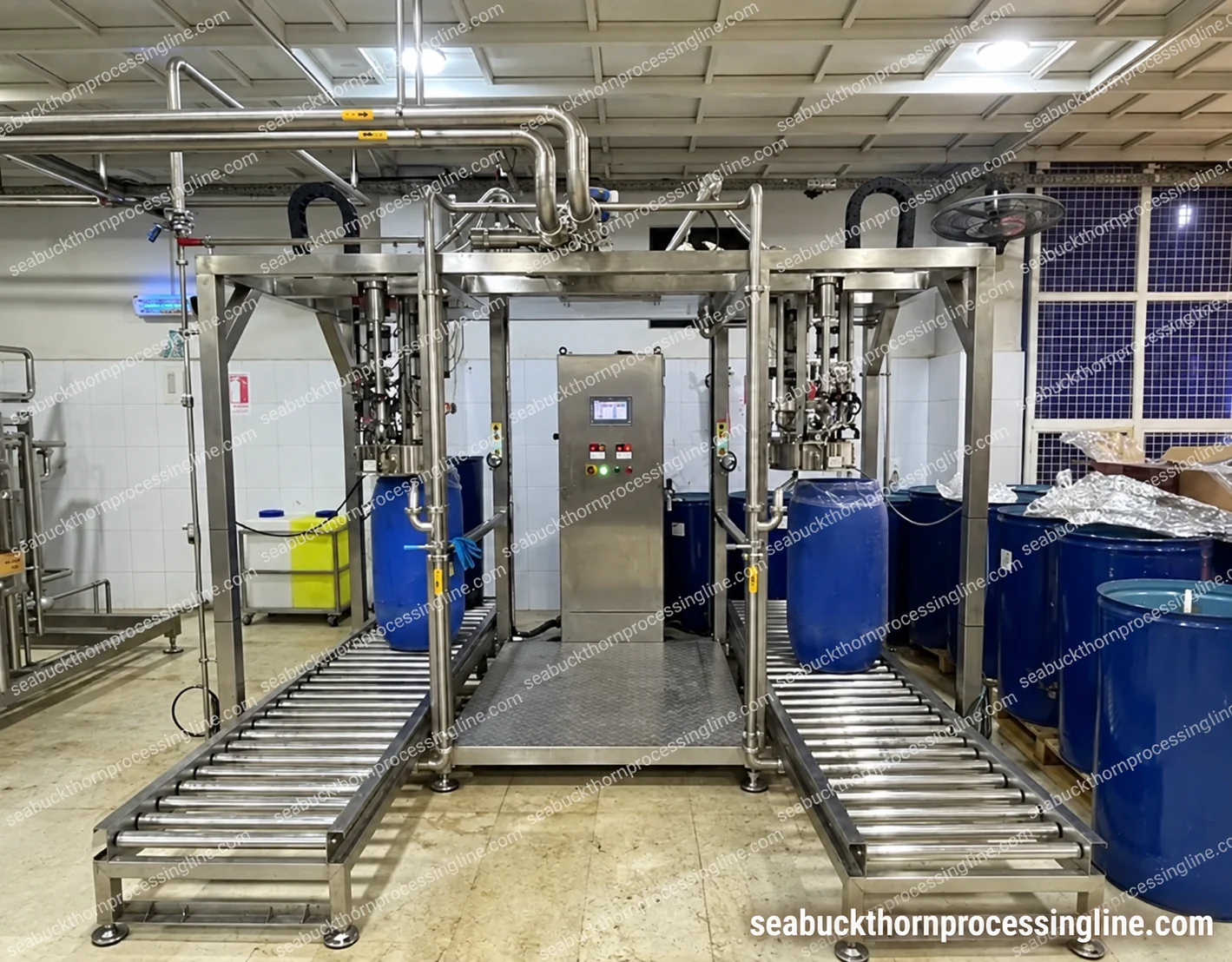
Include cleaning and interface acceptance in the supply scope
The module scope includes named tie-in points, control signals, operating limits and cleaning boundaries. Cleaning flow must reach the evaporator, product lines and relevant downstream equipment; return flow, temperature and chemical condition must be measurable. A separate supply connection may be needed where the existing cleaning system cannot serve the new circuit.
Commissioning establishes stable feeding, concentration control, discharge, thermal operation and package handling with the agreed product. The acceptance record distinguishes tests performed with water from those performed with sea buckthorn material, and records utilities and production conditions alongside output. This makes an extension assessable without claiming the performance of the entire upstream factory.
Further answers
Equipment and process questions
Can the module start with prepared puree instead of juice?
Yes, with equipment selected for the puree at its actual solids content, viscosity and particle distribution. These conditions affect circulation, heat-transfer passages, transfer pumps and filling. A configuration selected for clarified low-viscosity juice should not be assumed suitable without reassessment.