Belts and fruit-handling surfaces need physical access
Leaves, twigs, skins and soft fruit can collect at belt returns, cleats, transfer points and tank corners. These locations need access for debris removal and inspection. A spray visible above the product path does not establish that the underside of the belt or its support structure is reached.
Drainage and separation between dirty reception and prepared fruit are part of the layout. Equipment positioning should allow operators to reach the relevant surfaces safely after isolation and prevent cleaning runoff from contaminating the next production area. Access panels, belt handling and guards belong in the maintenance arrangement.
Screens, press belts and reject paths have distinct needs
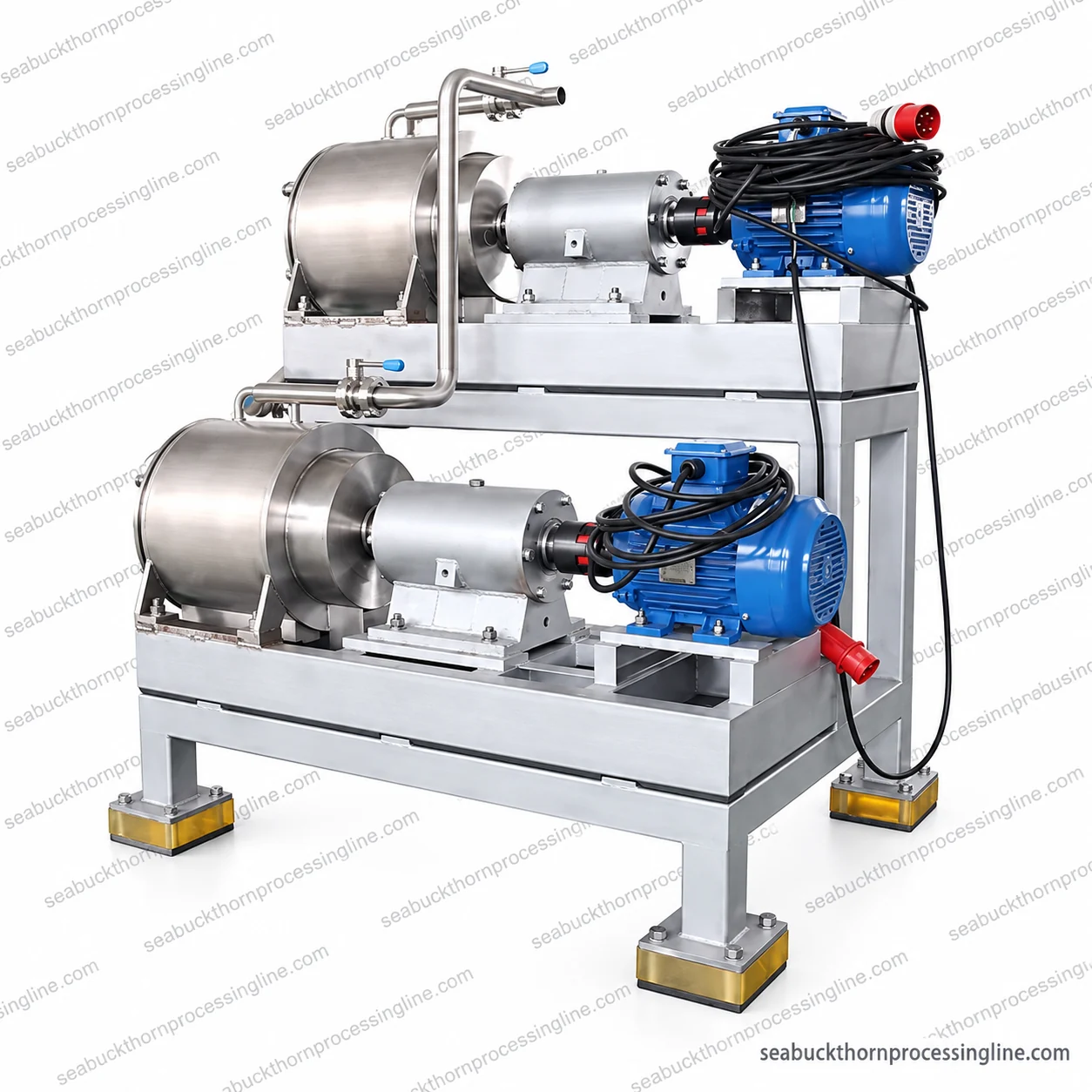
A pulper screen can retain skin and fibre in its perforations and near the reject outlet. Cleaning access must include the screen surface, product collection space and the parts exposed when the machine is opened. Screen removal also permits inspection for wear or damage that could affect the product.
On a belt press, the cloth, roller contact zones, collection trays and return path need attention. Continuous belt washing during production helps manage the pressing surface but does not replace the complete end-of-run cleaning sequence. Safe access and the method of removing retained solids must be defined for the actual installation.
CIP works through a connected supply-and-return path
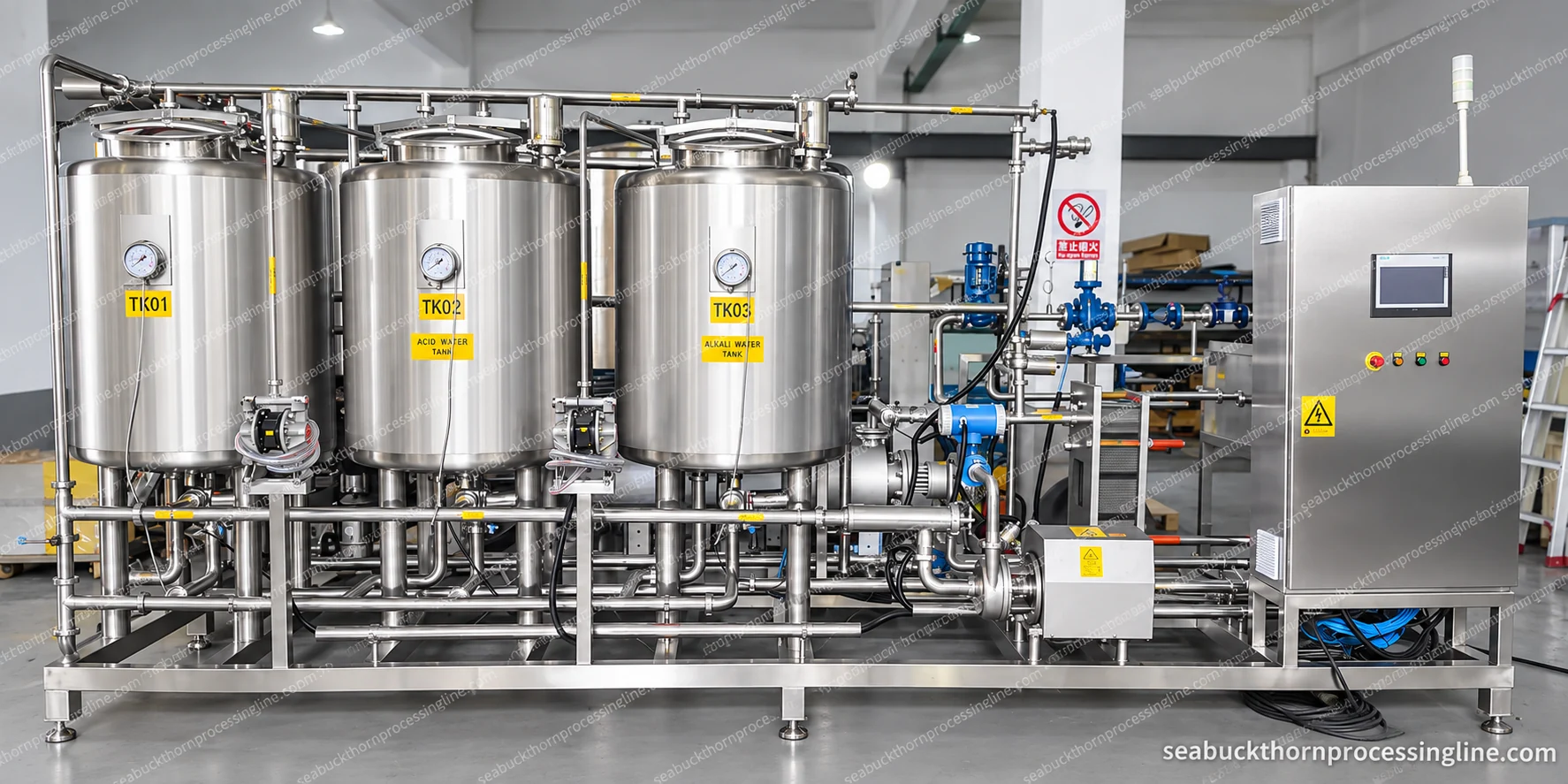
The CIP system circulates cleaning media through the selected tanks, piping and processing equipment. Effective cleaning depends on the hydraulic route, time, temperature and chemical condition at the circuit, not only at the cleaning skid. Product deposits, oil-bearing soils and equipment materials determine the validated sequence.
Tank coverage, low-point drainage, valve positions and return capacity need to be checked as part of the circuit. A separator may have its own cleaning and inspection sequence, while aseptic equipment has additional sterilization duties. Cleaning and sterilization serve related but different purposes and should remain identifiable in operation.
Verify the result before returning to production
Cleaning records should show the circuit actually run and the relevant conditions achieved. Inspection points and appropriate verification methods are chosen for the product and hygienic process. A clear-looking return stream alone does not prove every product-contact surface is clean.
After maintenance or screen replacement, confirm correct assembly, guards, seals, drainage and valve alignment before restart. Keep spare screens, seals and other routine wear items identifiable by their actual machine configuration. A repeatable return-to-production sequence reduces both product contamination risk and mechanical damage.