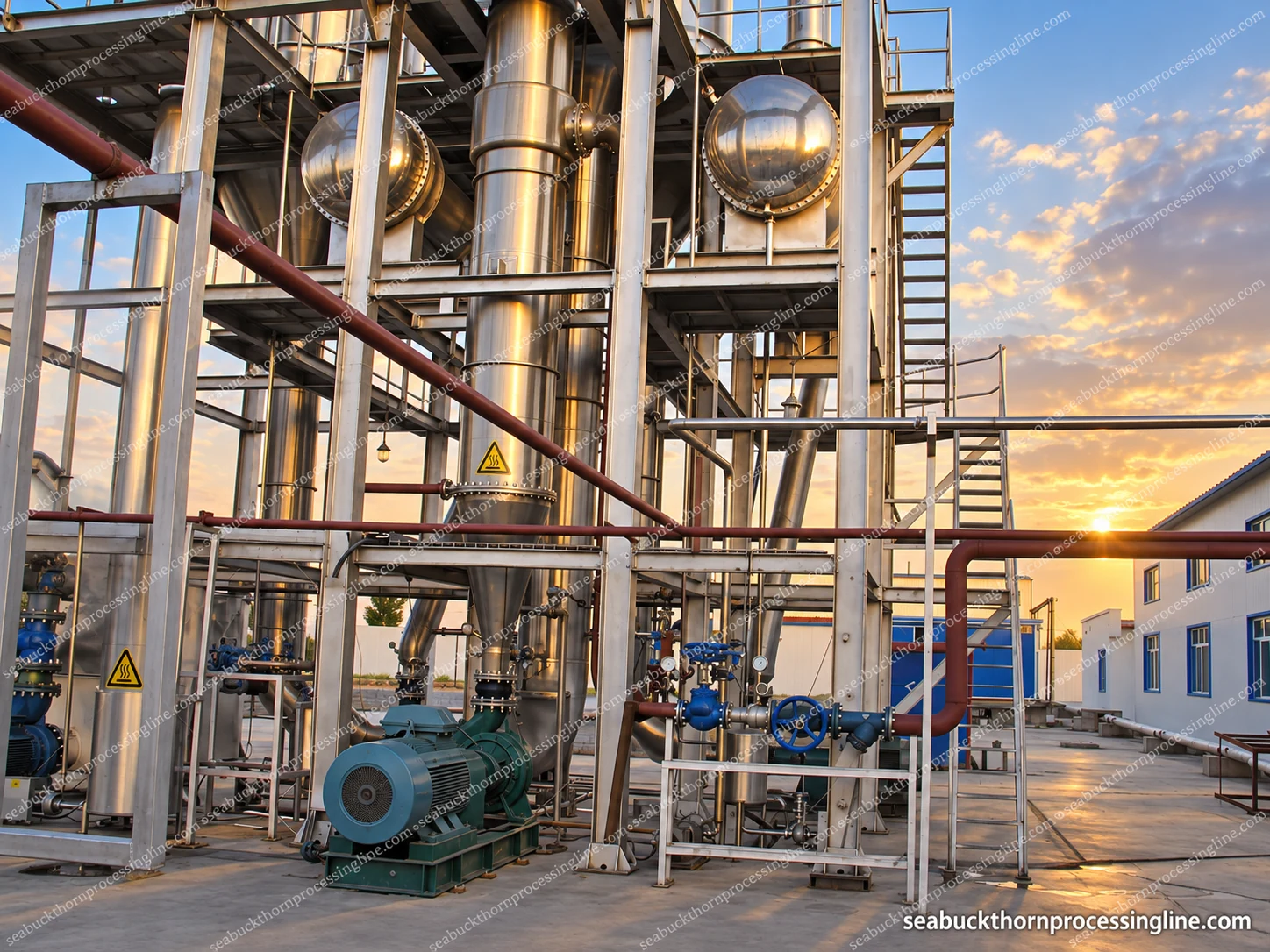
Check viscosity and deposits at the concentrated end
Feed that pumps easily at its initial concentration may become more viscous as water is removed. Retained pulp and other dispersed material affect flow and surface wetting. The final product conditions therefore influence both the evaporator and its discharge pump, pipework and next processing stage.
Fouling behaviour is evaluated over a meaningful run, not only during the first minutes after cleaning. Record the change in heat-transfer performance and the product conditions at which deposits or unstable flow appear. The usable production window includes the cleaning interval needed to restore the selected duty.
Match the circulation arrangement to the liquid
A falling-film system depends on distributing the feed across its heating surfaces and maintaining a suitable flowing film. A circulation-based arrangement recirculates product through the heating section and separates vapour in the associated vessel. The choice reflects the product rheology, suspended material and fouling tendency.
Available heating and cooling utilities, vapour handling and intended operating duration shape the system. Single-effect or multiple-effect arrangements are configuration choices within the evaporation family. Their benefit must be evaluated at stated conditions; a general energy-saving percentage does not specify the steam demand of a sea buckthorn project.
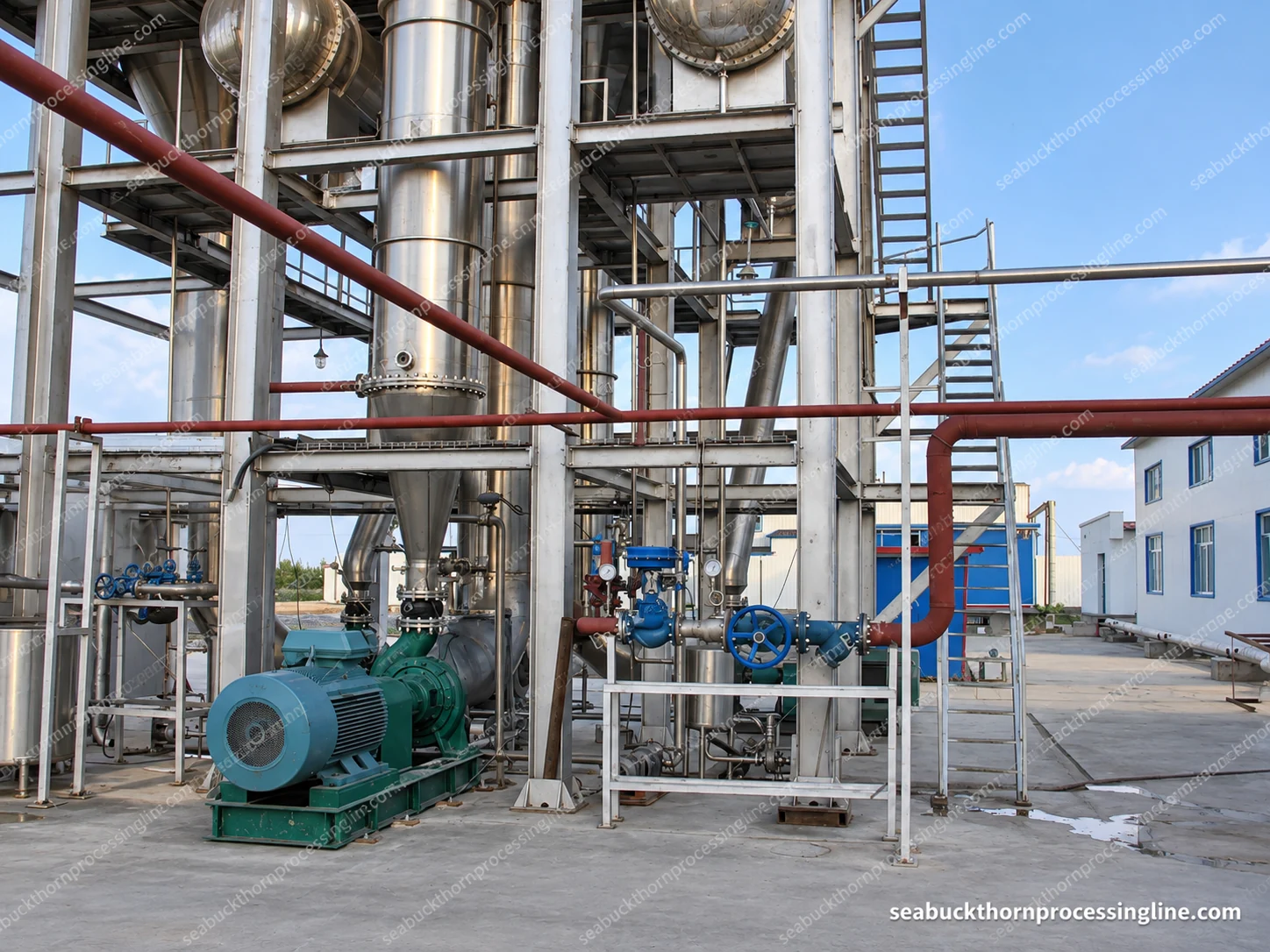
Follow air and thermal exposure through the whole route
Air can enter during reception, transfer or mixing. Where deaeration is part of the process, the inlet temperature, vacuum and discharge arrangement are selected together. Foaming and entrained droplets can carry product into the vacuum system; operation must control them while preserving the intended product.
Thermal history includes tank waiting, repeated circulation, heating, holding and cooling. A short nominal holding section does not describe every prior exposure. Changes in colour, aroma and consistency are evaluated on the finished ingredient under the selected run conditions, without assuming a fixed retention outcome.
Keep concentration and product preservation as separate duties
Concentration establishes the required product strength; it does not by itself establish the microbial process or storage life. The final thermal and packaging route is developed around the product, package and intended handling conditions. Aseptic filling also requires a compatible sterile transfer and packaging interface.
Trials and commissioning should record the final product as well as operating stability and utility use. Compare viscosity, concentration and appearance using defined sampling methods. These records provide a sound basis for choosing the module and for repeating its operating conditions.